On the eve of its EU presidency, Warsaw plans to only tackle trade talks with Ukraine after a presidential election in May, diplomats tell POLITICO.
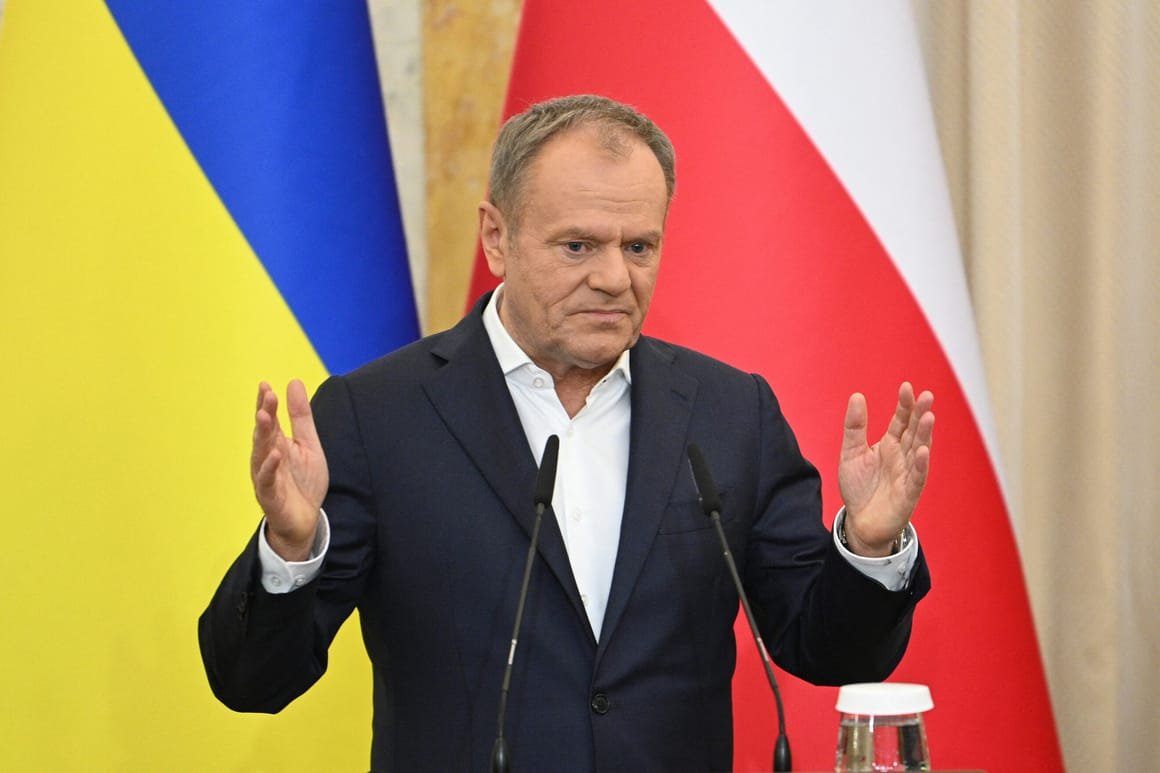
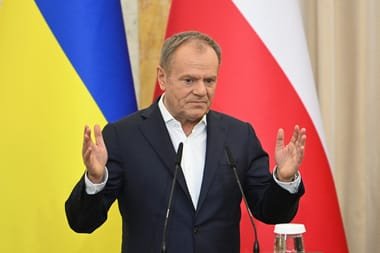
Poland’s political clock is ticking, and Ukraine may be its first casualty.
Warsaw is signaling it will keep a review of crucial European Union trade terms for Ukraine on the down-low until after its presidential election in May, three EU diplomats told POLITICO — a decision that could deliver a heavy blow to Kyiv’s economy.
The delay comes as Prime Minister Donald Tusk faces a hugely challenging six months steering the business of the European Union — as voters grow increasingly weary of the war in Ukraine and farmers protest loudly that cheaper agrifood imports from Poland’s eastern neighbor are ruining them.
Tusk’s political ally, Warsaw Mayor Rafał Trzaskowski, is running in the presidential election — which if he wins would finally turn the page on an era of populist rule and end a political stand-off with outgoing President Andrzej Duda of the right-wing Law and Justice (PiS) party that has held back the prime minister’s year-old government.
Although Tusk is a market-friendly liberal and Poland has benefited hugely overall from the economic opening with Ukraine of recent years, any loose talk about free trade or other touchy issues risks alienating voters. And, if Trzaskowski loses, that could ruin his project to restore his country to the heart of Europe.
Warsaw will take over the EU’s rotating presidency in January, handing it significant influence over the bloc’s policy and legislative agenda. But with the presidential election looming, the government is laser-focused on domestic politics. EU diplomats now expect any meaningful trade talks to remain frozen until after the vote.
Deadline pressure
At stake is Ukraine’s ability to sell goods across Europe without facing tariffs. In the wake of Russia’s 2022 invasion, the EU adopted special rules — called Autonomous Trade Measures — to keep Kyiv’s economy afloat by waiving import duties and quotas on Ukrainian products.
Those measures expire on June 5. EU leaders have pledged to replace them next year with adjusted limits under Ukraine’s existing trade agreement with the bloc, the Deep and Comprehensive Free Trade Area, rather than having to roll them over again every 12 months.
While the European Commission is in the driving seat in trade negotiations with Kyiv, the plan requires approval from EU capitals — and Poland is signaling it will not make this an urgent political priority for the work of the Council of the EU, according to the diplomats.
A spokesperson from the Polish Permanent Representation said that Poland was not slow-walking the revision of the trade terms with Ukraine, stressing the ball was now in the court of the Commission.
“The moment the Commission will send the text, we will proceed as fast as possible. We are publicly in favor of the DCFTA. We don’t want the prolongation of the ATMs,” they said.
If the ATMs lapse, Ukrainian exports will face fresh restrictions — on top of wartime disruptions to production, Russian grain thefts and logistical headaches on its main Black Sea route to world markets. For Ukraine, the consequences could be dire, slashing revenues when every euro counts.
“The timing isn’t impossible, but it’s very, very tight,” one of the diplomats said. “The Poles won’t put it on the agenda. It’s a political choice.”
Unrestricted access to the EU market is critical, “now much more than ever,” Ukrainian Agriculture Minister Vitaliy Koval told POLITICO in a recent interview. Should no agreement be reached, trade terms would revert to older, far more restrictive quotas, further battering Ukraine’s war-hit economy.
Farm vote
With an election around the corner, Warsaw is meanwhile treading carefully to avoid alienating Polish farmers, a small yet crucial constituency.
Local farmers argue that Ukraine’s tariff-free access has flooded domestic markets with cheap grain, poultry and sugar, driving down prices and threatening their livelihoods. Their anger has fueled mass protests since 2023 and has contributed to growing war fatigue among the Polish public.
That’s a risk to the candidacy of Trzaskowski — whose election victory might align with the interests of Ursula von der Leyen, the Commission president, who would prefer to see a pro-EU, liberal leader in one of the bloc’s largest countries.
This alignment has been evident in von der Leyen’s approach to Poland’s controversial unilateral ban on Ukrainian grain imports.
Even though the embargo clearly violates EU law, the Commission has refrained from launching an infringement procedure against Warsaw. Poland is one of only three EU countries to maintain such bans — the others being Hungary and Slovakia, both led by populist governments.
The lack of action from Brussels underscores von der Leyen’s willingness to grant Tusk considerable leeway to focus on domestic priorities without fear of EU penalties.
“He’s a charismatic leader from a big country. There’s a need for that especially now when Germany and France are preoccupied with turmoil in their domestic politics,” said a fourth diplomat, who like the others cited in this article was granted anonymity to discuss the sensitive matter.
Kyiv views unrestricted access to the EU market as crucial to its longer-term aspirations of joining the bloc. And, ironically, the push to delay the trade talks comes just after Tusk pledged to champion Ukraine’s EU accession during a visit to Lviv on Tuesday.
The delay also creates a logistical nightmare: The Commission will face a tight window to finalize and secure approval for its proposed changes before the June deadline. Failure to do so would not only disrupt Ukrainian exports but also complicate the EU’s broader economic and political relationship with Kyiv.
Koen Verhelst contributed reporting. This story has been updated.