



TikTok presents a major test of how the EU polices foreign interference and election meddling.
The European Union is bringing out the big guns over TikTok’s handling of election content.
The European Commission on Tuesday announced a formal investigation into how the Chinese-owned platform managed risks of elections meddling — notably in Romania. Already, the move has stoked up the fight over freedom of speech online between Europe’s right wing and its mainstream political groups.
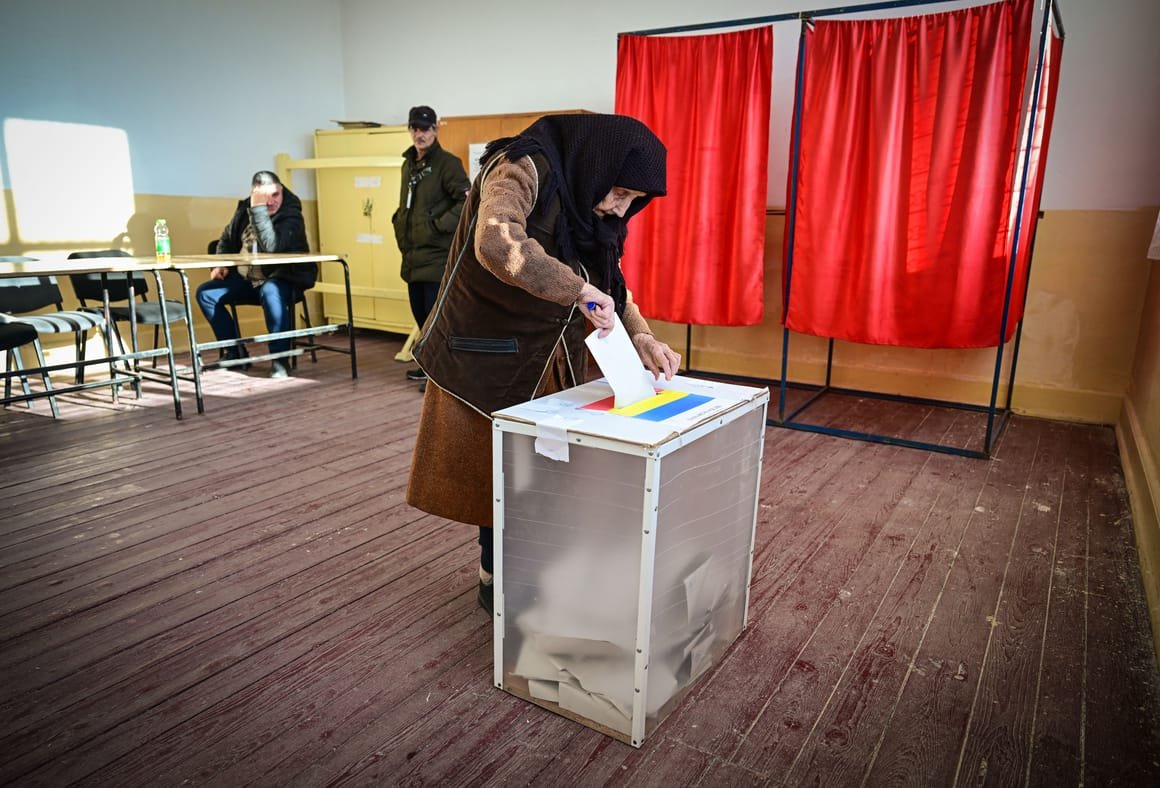
Romanian authorities in the past two weeks accused TikTok of “irregularities” on its platform after a shock victory of ultranationalist, pro-Russia candidate Călin Georgescu in the first round of Romania’s presidential election in late November. Romania’s top court later annulled the election.
European Commission President Ursula von der Leyen weighed in on Tuesday: “Following serious indications that foreign actors interfered in the Romanian presidential elections by using TikTok, we are now thoroughly investigating whether TikTok has violated the Digital Services Act [DSA] by failing to tackle such risks,” she said, announcing a formal probe — a rare public comment from the EU chief on such an investigation.
The escalation comes after weeks of wrangling between European and Romanian officials and TikTok executives. At the heart of the saga are reports and research that Georgescu got a boost from a network of paid influencers and bots, and allegations that TikTok didn’t properly address these threats. Romanian authorities this month declassified a series of documents suggesting these campaigns were eerily similar to Russian influence operations in Ukraine and Moldova.
The Commission will specifically investigate TikTok’s recommendation systems for “coordinated inauthentic manipulation or automated exploitation of the service,” as well as the platform’s policies on political ads and paid political content, the Commission said in a statement.
The case on Tuesday flamed up tensions between Europe’s political groups over free speech and foreign interference, in a five-hour debate at the European Parliament on Tuesday.
“I don’t see this kind of evidence » of foreign interference, said Patryk Jaki, a Polish member of the hard-right European Conservatives and Reformists, telling critics. « What I see [is] you like censorship.”
Catherine Griset, French member of the far-right Patriots for Europe group, said the EU’s fight against misinformation « looks like a totalitarian regime. »
Others accused the European Commission of facilitating election interference by helping Romania’s ruling party overturn the elections.
But Helmut Brandstätter, a centrist, Austrian member of the liberal Renew group, said Russia and China are actively interfering in EU elections and blamed the far right of being « Putin’s friends » for not calling it out.
Germany is up next
The case of the Romanian election has turned into a watershed moment for Europe as it seeks to control social media platforms’ influence on elections. The country — a key eastern EU member state and NATO member — is a key battleground in the West’s diplomatic and political tussle with Moscow.
But the real nightmare scenario that European Parliament members voiced concerns about on Tuesday is for disinformation to go rogue when Germans head to the polls in February.
TikTok has consistently denied it didn’t manage risk properly in Romania. “We’ve protected the integrity of our platform through over 150 elections around the world and continue proactively addressing these industry-wide challenges,” a TikTok spokesperson said. “TikTok has provided the European Commission with extensive information regarding these efforts, and we have transparently and publicly detailed our robust actions.”
The spokesperson added that the app didn’t accept paid political advertising and “proactively removed content for violating our policies on misinformation, harassment and hate speech.”
Earlier in December, the Commission ordered TikTok to retain all data related to election risk management for four months, starting Nov. 24 and running through March — capturing what will happen in the run-up to the German election. The platform also submitted a response to formal questions on elections on Dec. 16.
This is TikTok’s third investigation under the DSA; one remains open, while another was closed after the platform made commitments to the Commission.
This article has been updated.