
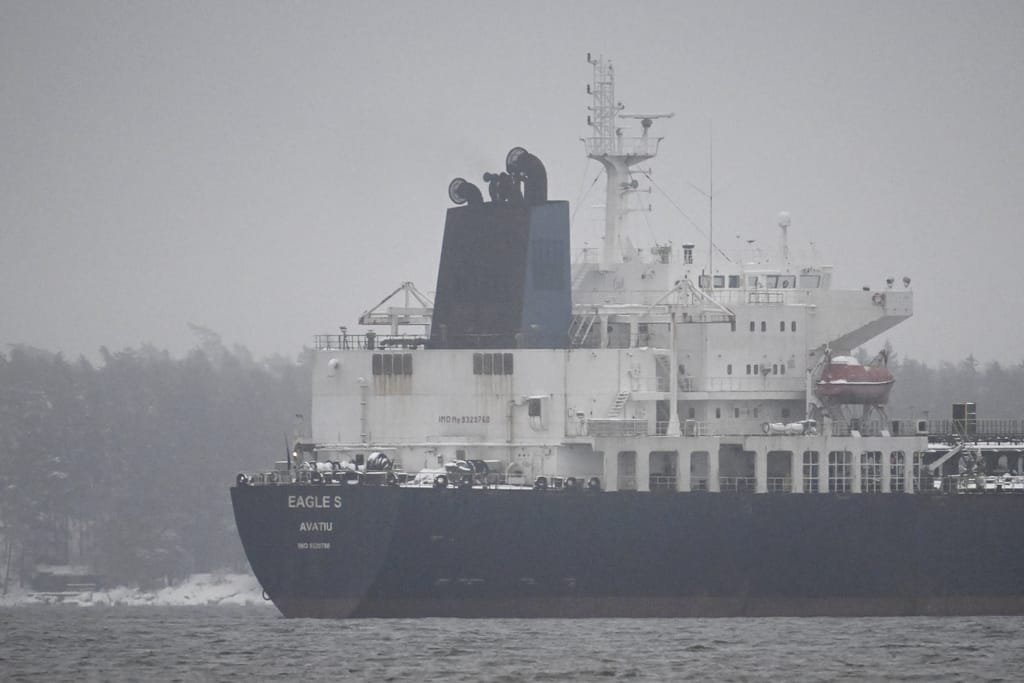
Finland’s recent seizure of a suspected shadow fleet vessel has galvanized behind-the-scenes talks on grabbing Moscow’s oil tankers.
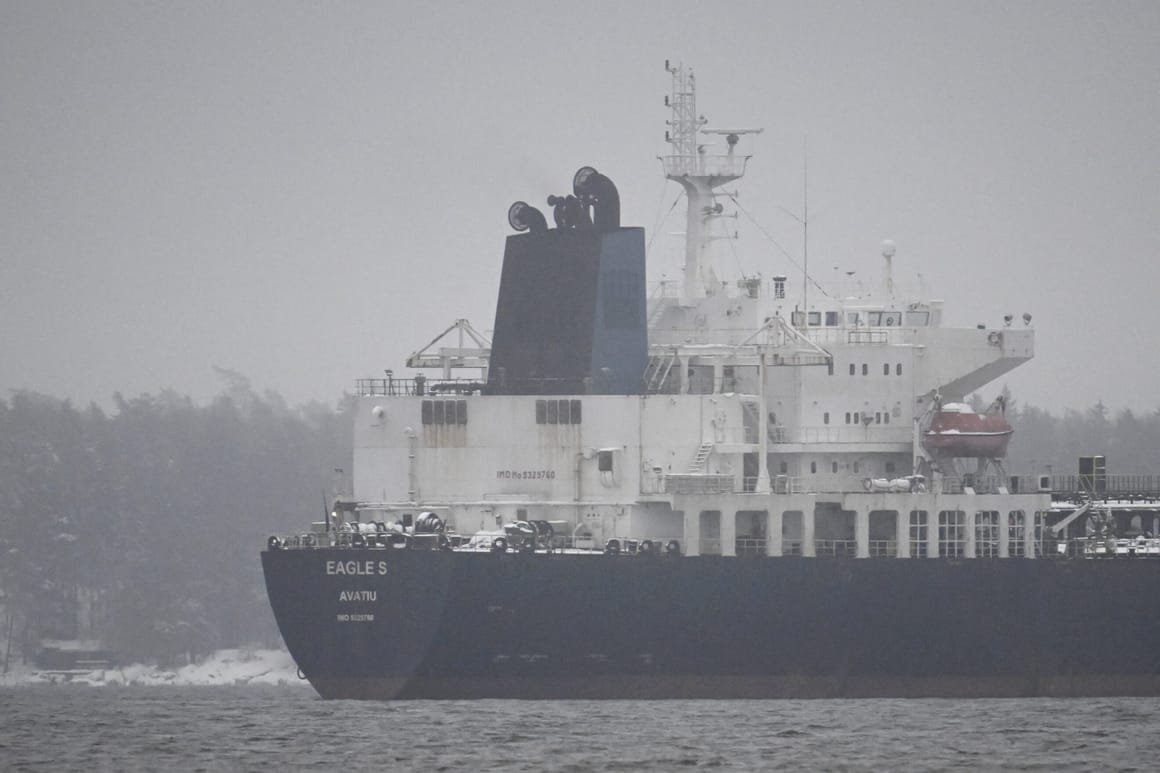
TALLINN, Estonia — Baltic Sea countries are exploring new measures to detain ships they suspect of cutting cables and illegally carrying Russian oil, using everything from piracy laws to insurance rules, according to two EU diplomats and two government officials.
Countries including Finland, Estonia, Lithuania and Latvia are considering leveraging international law to grab vessels on environmental or piracy grounds, said the officials, who were granted anonymity to discuss the private talks. Failing that, the countries could jointly draft new national laws to seize more ships farther out at sea.
The new proposals come amid widespread frustration that Western sanctions against Russia are faltering nearly three years after Moscow launched its all-out invasion of Ukraine. At the same time, Kyiv is facing increasing difficulties on the frontline and EU countries are wary of U.S. President Donald Trump’s unpredictable approach towards Russia.
Moscow continues to transport its oil and dodge sanctions by relying on an ever-growing “shadow fleet” — aging vessels with obscure ownership and unknown insurance. Russia’s oil and gas exports generate around half of the Kremlin’s revenues.
“Close to 50 percent of sanctioned trade [in Russian seaborne oil] is going through the Gulf of Finland,” said Estonia’s Foreign Minister Margus Tsahkna. “There are the environmental threats, there are the attacks we’ve had against our undersea infrastructure.”
“Now the question is … what can we do with these ships?” he told POLITICO. “We cannot block all the sea, but we can control more. … There are lots of opportunities.”
The talks gained fresh momentum after Finland seized a suspected shadow fleet vessel suspected of sabotaging Baltic Sea power and telecoms cables in December. The ideas being considered fall under three categories, the officials said.
First, authorities could grab vessels that risk damaging the local environment, such as through oil spills. Second, the officials said, countries could use piracy laws to seize ships threatening critical undersea infrastructure.
Finally, if international law fails, countries are also discussing jointly imposing new national legislation to make it easier to grab ships further out at sea. Those could include requiring tankers in the Baltic Sea to use a prescribed list of credible insurers, the officials said.
In all cases, they added, the countries would ask the EU to coordinate efforts.
According to Lithuanian Energy Minister Žygimantas Vaičiūnas, an EU statement on how countries can interpret international law “could be one of the first steps” in bolstering the legitimacy of those new efforts.
The Baltic Sea is the critical artery for Moscow’s oil trade. Last year, 348 shadow-fleet vessels making up 40 percent of Russia’s total oil sales departed from Baltic ports — a figure equivalent to a third of Moscow’s annual defense budget.
Victor Jack reported from Helsinki, Finland. Gabriel Gavin reported from Tallinn, Estonia, and Vilnius, Lithuania.