European countries are pushing for new powers to squeeze Moscow’s shadow fleet after a spate of incidents in the Baltic Sea.
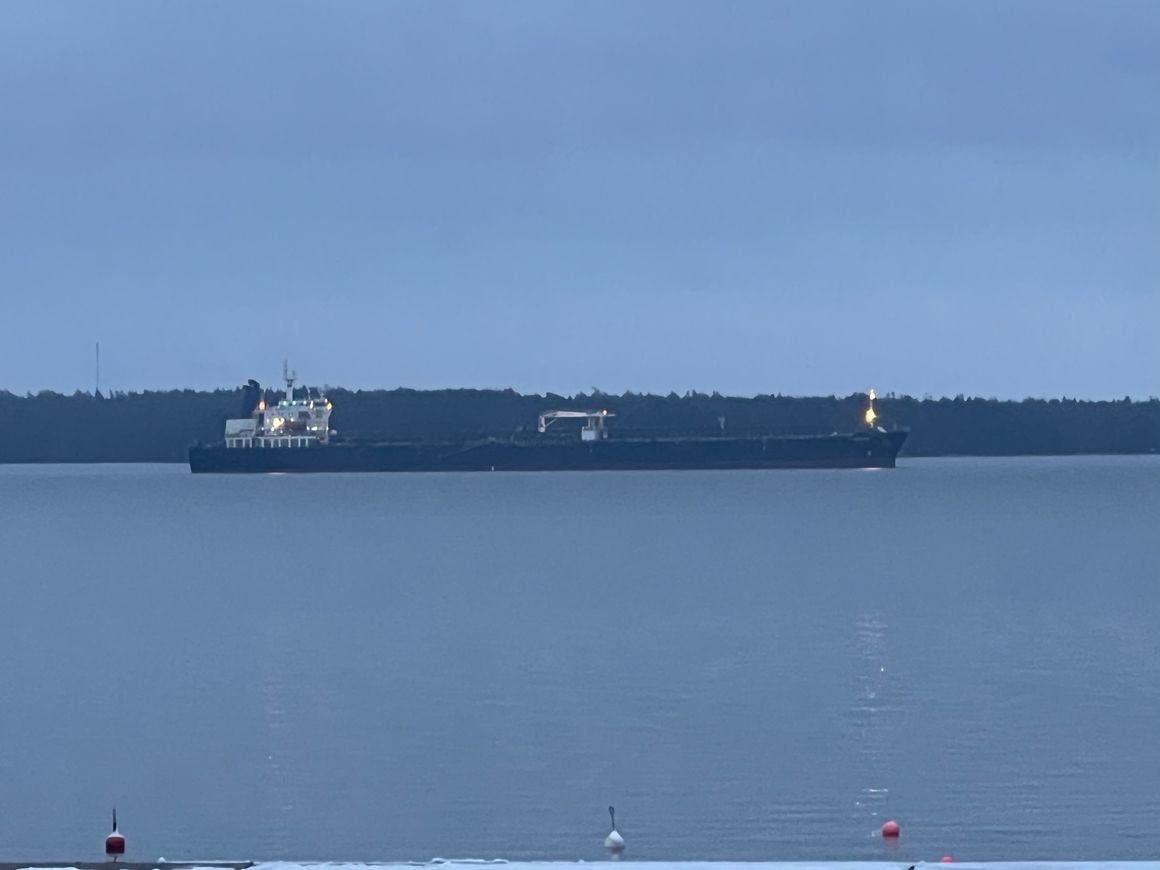
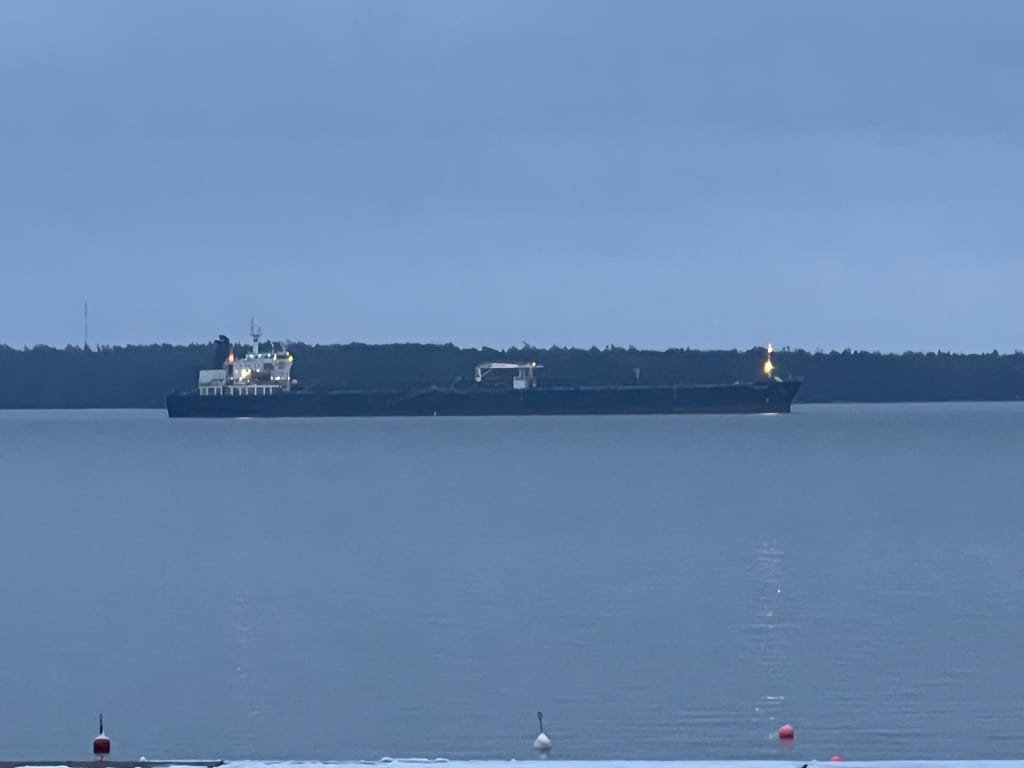
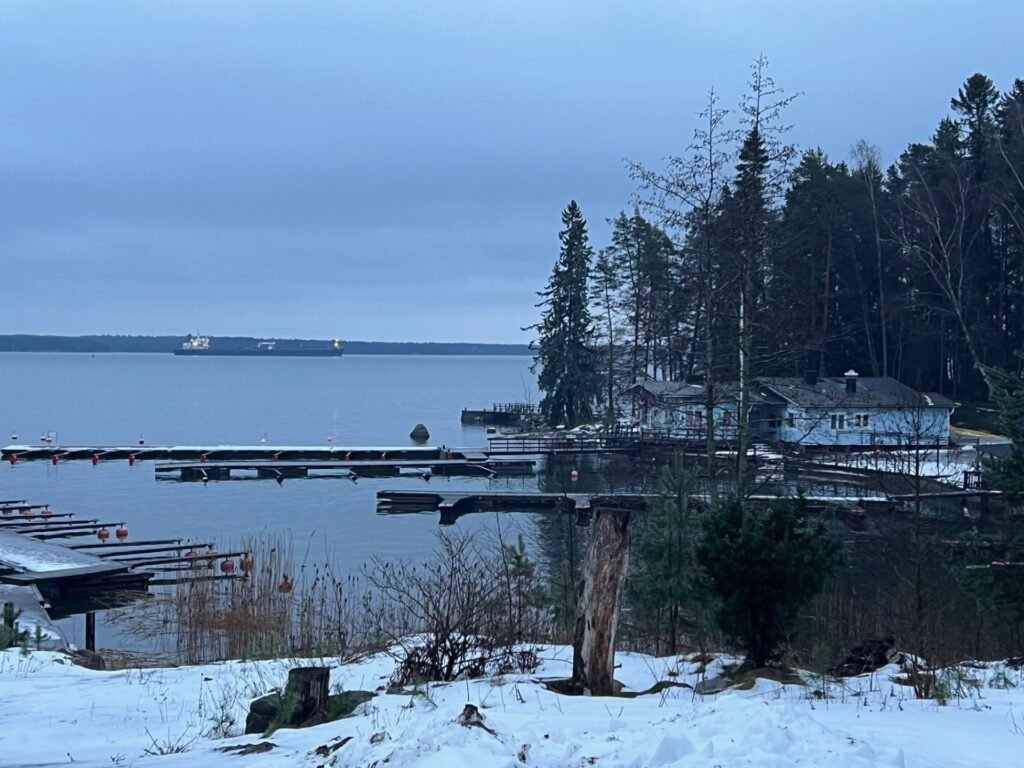
PORVOO, Finland — Secluded in a Finnish bay and barely visible between snow-flecked trees, a creaky tanker the length of two football fields quietly bobs up and down — a surprisingly tranquil scene considering the waves it has sent across Europe.
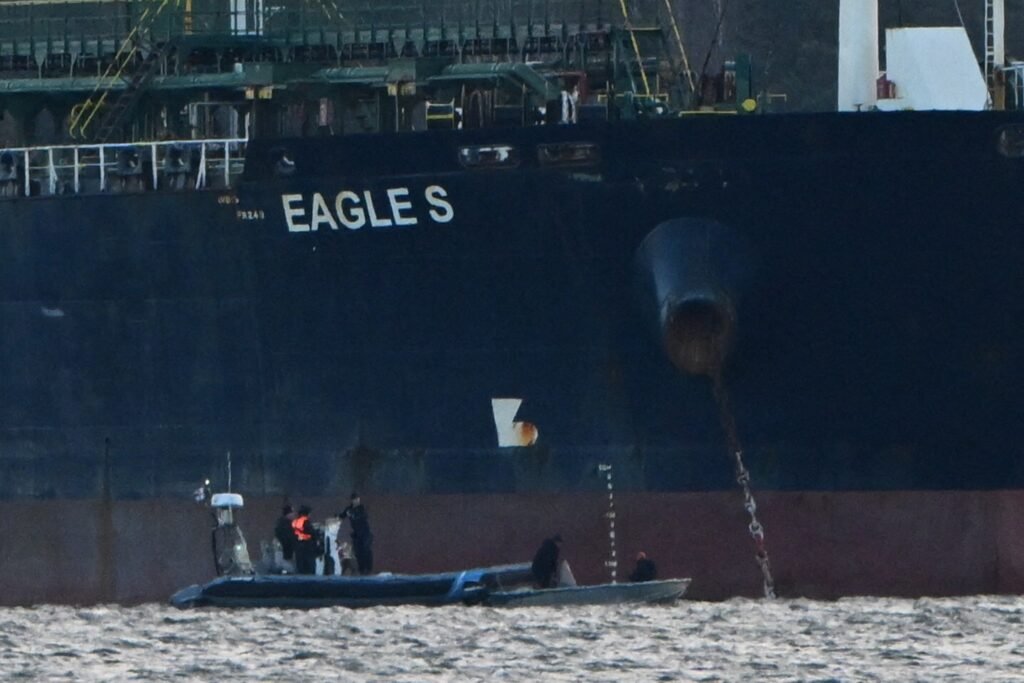
Finnish authorities seized the Eagle S ship in December in an all-guns-blazing operation, suspecting it had sabotaged a subsea power link connecting Estonia to Finland. The detention of the ship — which was carrying 100,000 barrels of oil from St. Petersburg — was a galvanizing moment, and appeared to be a new front in a clandestine war between Russia and the West.
Now, European countries are holding behind-the-scenes talks on large-scale seizures of Moscow’s oil-exporting tankers in the Baltic Sea, according to two European Union diplomats and two government officials. They are also currently drafting new legislation to add legal heft to those efforts.
The proposals being considered include using international law to grab vessels on environmental or piracy grounds, said the officials, who were granted anonymity to discuss the private talks. Failing that, the countries could go it on their own, jointly imposing fresh national laws to seize more ships further out at sea.
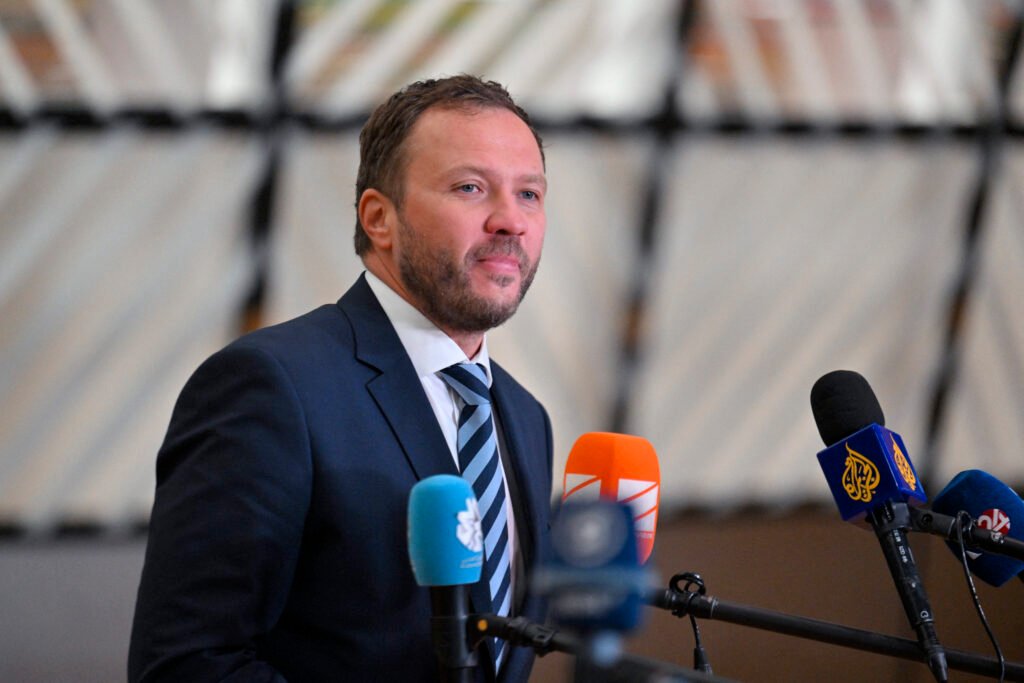
“Close to 50 percent of sanctioned trade [in Russian seaborne oil] is going through the Gulf of Finland,” said Estonia’s Foreign Minister Margus Tsahkna. “There are the environmental threats, there are the attacks we’ve had against our undersea infrastructure.”
“Now the question is … what can we do with these ships?” he told POLITICO. “We cannot block all the sea, but we can control more … There are lots of opportunities.”
The talks illustrate Europe’s growing frustration that Russia continues to transport its oil and dodge Western sanctions by relying on an ever-growing “shadow fleet” — aging vessels with obscure ownership and unknown insurance. By doing so, Moscow has been able to preserve a key lifeline for its war effort in Ukraine, given that oil and gas generate around half of the Kremlin’s revenues.
And it’s all happening right under Europe’s nose, in its own waterways.
Still, the new plans won’t easily be translated into action. According to experts and maritime lawyers, difficulties include legal retaliation from Russia, steep financial costs and onerous logistics. It will also mean navigating labyrinthine global shipping laws.
“We have to coordinate, we have to agree how we implement these conventions,” Tsahkna said.
Out of the shadows
In 2022 the EU ordered a ban on all Russian oil imports and imposed a price cap with the G7 on Moscow’s international crude sales, hoping to squeeze Kremlin revenues following its invasion of Ukraine.
But Russia soon found ways to dodge those measures. Moscow’s shadow fleet — which often relies on dubious insurers to evade the oil price cap — today accounts for up to 17 percent of all oil tankers worldwide.
As a result, “the shadow fleet is now transporting over 80 percent of all Russian crude oil,” said Isaac Levi, the Russia-Europe lead at the Centre for Research on Energy and Clean Air think tank.
The Baltic Sea is the critical artery for that illegal trade, he argued. The vessels are typically loaded with Russian oil at ports like Ust Luga near St. Petersburg before winding their way through the Gulf of Finland and across the Baltic Sea to the world’s oceans via the North Sea.
Last year, 348 shadow fleet vessels making up 40 percent of Russia’s total oil sales departed from Baltic ports, Levi said — a figure equivalent to a third of Moscow’s annual defense budget.
“Without attacking the shadow fleet, [Western allies] enable Russia’s main source of income,” he said, which “generates an incredibly high and rising military spending for the war in Ukraine.”
They may also be enabling sabotage, according to Christian Bueger, a maritime security professor at the University of Copenhagen — as the Eagle S shows. Numerous commercial vessels beyond the shadow fleet have been responsible for at least four similar incidents in the Baltic Sea since 2022.
“What is happening right now is … escalation,” he said. “We’re just going to see more attacks on critical infrastructure, both at sea as well as on land.”
War on the waves
The mounting incidents are generating momentum to go after the tankers sailing with impunity through European waters — and not just with sanctions, which have proven too porous.
“We are witnessing the fact that … there are some escape routes” in Western sanctions against Russia, Lithuania’s Energy Minister Žygimantas Vaičiūnas told POLITICO. “That’s why countermeasures to the shadow fleet would be really helping to achieve the results, which we are not capable of achieving through the sanctions regime.”
On top of incoming EU proposals to blacklist 74 shadow fleet tankers, Nordic and Baltic countries are separately discussing how they can legally start seizing more Russia-linked vessels, according to the officials and diplomats.
The proposals largely fall into three buckets, they said.
First, authorities could grab vessels that risk damaging the local environment, such as through oil spills. Given that most of these tankers are at least 15 years old and are prone to defects, such accidents are a troublesome possibility and have likely already happened.
Second, the officials said, authorities could use piracy laws to seize ships threatening critical undersea infrastructure, as they’ve been doing since late 2023, with numerous vessels damaging vital power and internet cables.
Finally, if international law fails, countries are also discussing jointly imposing new national laws to make it easier to nab ships. Those could include requiring tankers in the Baltic Sea to use a prescribed list of credible insurers, the officials said, allowing countries like Estonia and Finland to detain ships relying on other, less-trusted operators.
In all cases, the officials added, the countries would ask the EU to coordinate efforts.
While “it wouldn’t be possible” to stop every shadow fleet tanker with the measures, one of the government officials said, that’s “not necessary.”
“Even if we can just slow down [the] ships, it hurts Russia,” the official argued. “Every day is expensive — if you combine this with the state of the Russian economy … everything matters.”
Fleeting proposals
Back in Finland, however, the Eagle S is a floating case study in the difficulties of aquatic seizures.
Finnish authorities initially seized the Eagle S on Christmas Day, with a helicopter dropping a special unit on the tanker as the navy, coast guard and police executed a joint offensive.
But after opening a preliminary investigation into the tanker’s EU-sanctioned cargo, Finnish authorities dropped the probe, finding the crew had not steered the vessel into Finland’s waters on purpose.
The ship is still under investigation for severing the Estonia-to-Finland Estlink 2 subsea power cable, having dragged its anchor 100 kilometers across the seafloor. But Helsinki is now facing legal backlash from the ship’s Emirati owner — with lawyers arguing it didn’t have the right to seize the vessel as the incident took place outside Finland’s territorial waters.
That’s a problem that won’t go away, according to Sean Pribyl, a partner specializing in international maritime law at Holland & Knight.
Within a country’s territorial waters — defined under United Nations law as 12 nautical miles from land — “it’s more likely that there’s authority that the state could apprehend that vessel,” he said, including for environmental and safety reasons.
Beyond that, it’s “much more limited,” Pribyl added. For example, in limited circumstances, countries can act past the boundary if they see a threat to natural resources in their “exclusive economic zones.”
In those zones and in international waters further out, the ship’s flag — which indicates where it is registered — determines which country has legal authority over the vessel; often, those countries are far away. In such locations, too, the right of free passage enshrined in U.N. law. becomes legally overriding.
In the Gulf of Finland — the narrow sea where Russian cargo ships set sail in the region — commercial vessels retain the right of free passage under Cold War-era treaties. Piracy laws, meanwhile, usually police vessels attacking other ships, not undersea power cables, Pribyl added.
That makes imposing national laws to seize vessels an “incredibly risky” endeavor, said Isaak Hurst, principal attorney at the International Maritime Group law firm. “It’s absolutely going to be challenged under international law,” he added, potentially costing countries “tens of millions.”
Add to that the cost of keeping the crew on board detained vessels, handling related immigration issues and “blowback from the flag state,” he said. “Politically, it’s just a hot mess.”
Countries are well aware of such problems. “Coastal states must uphold the principle of free navigation in accordance with international law,” acknowledged a senior Latvian intelligence official, who was granted anonymity to speak outside of formal communications channels.
“We are working with partners to find a balance between this freedom and the right of coastal states to protect their undersea cables,” the official said. Inspecting more vessels, they added, would require NATO support given the resources required.
Further seizures also run the risk of “escalation” with Russia, said Bueger, the professor, including Moscow dispatching its navy to act as a convoy for oil tankers. Large-scale operations to grab ships will also cost “millions,” he added.
Time to act
Still, officials are barreling ahead, with the three Baltic States openly discussing legal measures they can take together and in partnership with Brussels.
“Using already existing [international] conventions … is hard,” said Tsahkna, the Estonian minister. “We have enough opportunities to act more decisively … and we are going to do it at the EU level.”
According to Bueger, the bloc could also provide all countries with a “transparent, publicly available standard” on how to interpret international law, which would improve the legitimacy of tanker-seizing efforts.
A statement “could be one of the first steps” the bloc takes to tackle the problem, agreed Vaičiūnas, the Lithuanian energy minister.
At the same time, Vilnius is also beginning to pursue national efforts. According to Defense Minister Dovilė Šakalienė, Lithuania is eyeing new laws that would give authorities more power to seize vessels that drop their anchors, even if they’re just beyond the country’s territorial waters in its “exclusive economic zone.”
“We see that we are able to take additional actions,” Šakalienė said in an interview following a Cabinet meeting Wednesday. “And they are justified if we are defending our national security interests, if we are defending our property.”
“Sanctioned ships,” she added, “shouldn’t be floating around happily without any problems.”
Victor Jack reported from Porvoo, Finland. Gabriel Gavin reported from Tallinn, Estonia and Vilnius, Lithuania.