For the first time in a decade, the number of unemployed is closing in on 3 million — and there’s more to come.
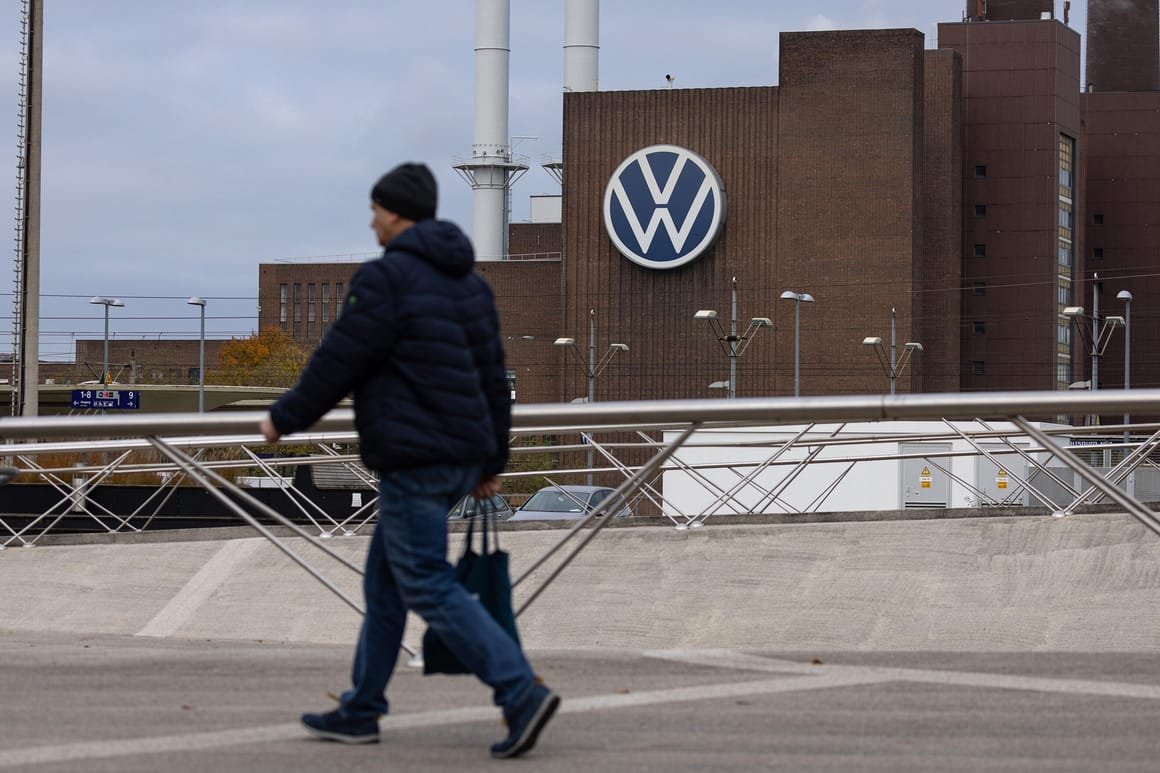
For most of the last 20 years, the labor market reforms of ex-Chancellor Gerhard Schröder have ensured near-full employment in Germany. But the model is creaking ever more loudly, due to a broad-based industrial crisis and a widening skills gap.
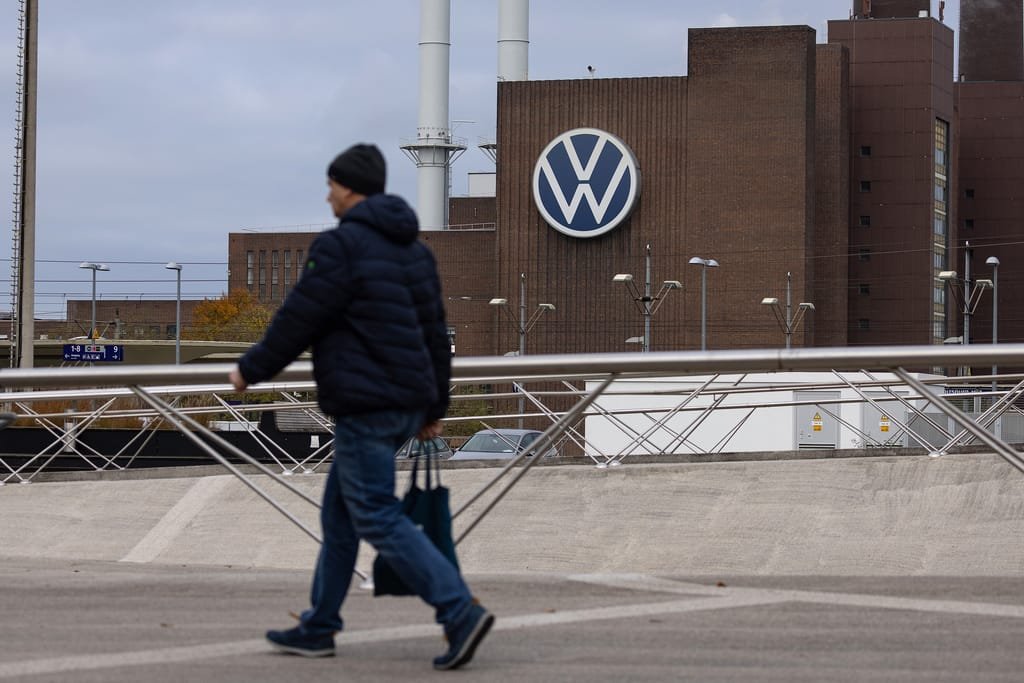
It’s just a matter of months until the number of unemployed people in Germany hits 3 million for the first time in a decade, as companies either go bankrupt or give up waiting for a turnaround that just refuses to arrive. After a wave of plant closures in energy-intensive industries such as chemicals in 2022, the key automotive sector succumbed last year, with Volkswagen and others announcing thousands of job cuts.
That’s now having knock-on effects on all the smaller sectors that live off the manufacturing giants. The employment barometer of Munich-based research institute Ifo shows that “almost all branches of industry in Germany want to reduce their headcount.”
At the start of the year, the number of people out of work rose by a seasonally adjusted 11,000 to 2.88 million, or 6.2 percent of the workforce. The jobless rate is now at its highest level in more than four years, only just below where it peaked during the pandemic, and is clearly headed in the wrong direction. Klaus Wohlrabe, Ifo’s head of surveys, said he expects the jobless rolls to hit the psychologically important 3-million mark by the middle of the year.
That headline number is still well below the dark days of the early 2000s, when German industry relocated much of its supply chain to central Europe, looking to exploit the far lower labor costs there. That exodus took unemployment to over 5 million, before Schröder’s reforms turned the tide.
Due to various factors, however, the number of unemployed doesn’t reflect the full extent of the slump. Greater recourse to early retirement schemes, state subsidies for shortened working hours, and a collapse in new vacancies all suggest things are worse than the official numbers attest.
Take the country’s famous Kurzarbeit scheme — a social insurance program that allows employers to reduce staff working hours instead of cutting jobs outright by giving employees temporary compensation. According to preliminary estimates by the Federal Labor Agency, 293,000 employees received benefits under that scheme in November, 30,000 more than in the previous month and up by two-thirds from a year earlier.
Kurzarbeit is designed to help companies through the hard part of the economic cycle, easing problems that are expected to be temporary. After the collapse of Germany’s « traffic light » government last year, the SPD and Green coalition extended the period during which companies can draw on Kurzarbeit from one year to two years.
But much of what has hit Germany in the last few years is structural rather than temporary: the loss of cheap energy supplies, and broader and more aggressive competition from China, especially in the crucial automotive sector.
“The extension may keep workers in unviable jobs rather than freeing them up for viable ones,” Wohlrabe said.
As such, the rise in Kurzarbeit masks the underlying weakness of the economy and could suggest a big wave of job cuts down the road.
“Many firms are weighing the cost of retaining staff against the risk of letting staff go and not finding qualified replacements once things pick up again,” Wohlrabe said. “A key question is how long companies can afford to do this.”
An increasing number seem unable to do so. Corporate bankruptcies rose by 25 percent in 2024, while Enzo Weber, head of research at the IAB labor market think tank in Nuremberg, warned this week that industry is shedding 10,000 jobs a month.
Early retirement cushions the fall
Another way of hiding unemployment, or under-employment, is a scheme known as Altersteilzeit, which allows those nearing retirement to cut their working hours.
The scheme is now set to play that role again, but without state subsidies. Volkswagen plans to shed the equivalent of 35,000 jobs in Germany by 2030, with a VW spokesman telling POLITICO that “we can reduce the workforce by about 24,000 by 2030 through the demographic curve with partial retirement offers.”
“The labor market crisis arrived a long time ago, but just isn’t visible,” Nicolas Stihl, owner of the eponymous saw manufacturer, told the Augsburger Allgemeine Zeitung last month. “The jobless rate in Germany would be a lot higher than 6 percent if parts of the big demographic cohorts weren’t being sent into early retirement through Altersteilzeit and the like.”
Data on people using early retirement schemes are heavily lagged: The German pension system’s latest numbers put it at 284,000 at the end of 2023, only halfway through the current recession. That’s less than half its 2009 peak of 672,000, but the number has risen every year since 2015, even in years when the German economy was growing solidly.
Wohlrabe said a new government, after elections scheduled for Feb. 23, may help remove some of the recent uncertainty that has contributed to rising unemployment levels.
However, he said, it will take time before any impact is felt. The question is — how much time?
Nicolas Ziebarth, who heads the labor market research unit at the Leibniz Center for European Economic Research, said he was pessimistic. “I believe the next 10 years will be very difficult for Germany and we’ll see the unemployment rate rising,” he said,