
Tehran is playing down the scale of the attack, saying it was limited to three small drones.
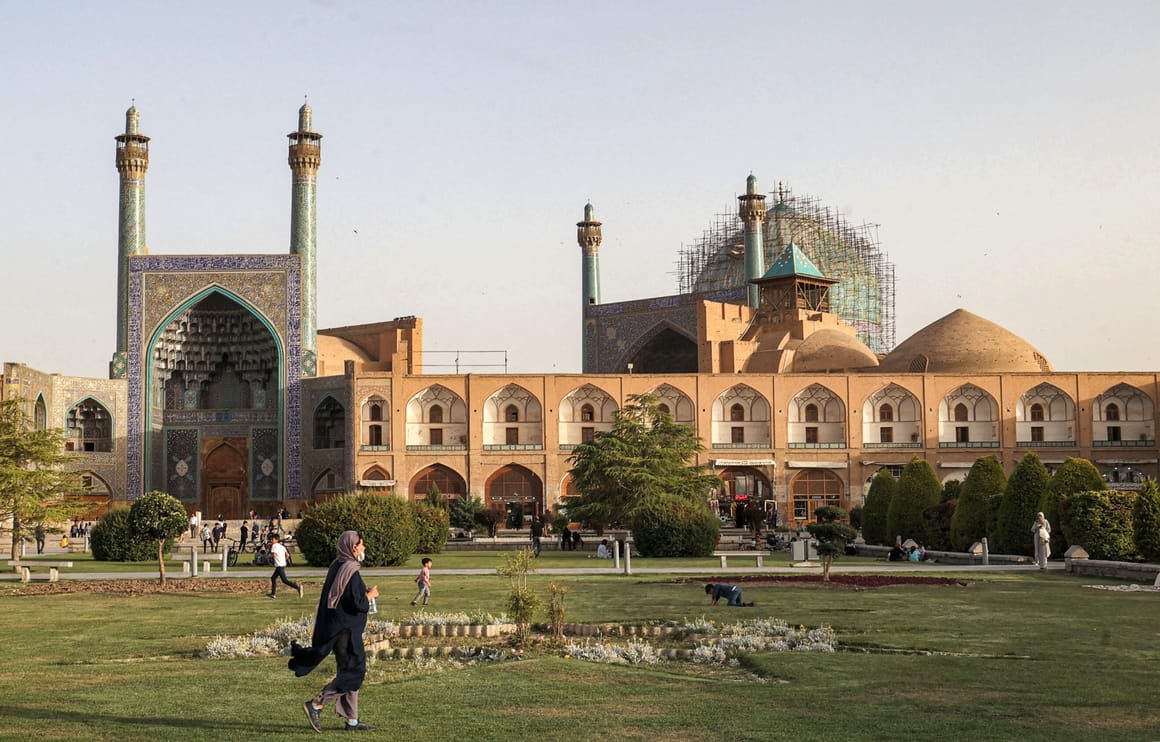
Iran said its air defenses had opened fire at what seemed to be a limited attack over the central city of Isfahan on Friday, as fears grow of an all-out war with Israel.
An Iranian commander told the official IRNA news agency that the batteries had made an interception at about 4 a.m., explaining blasts heard to the northeast of the city.
« We have not had any damage or incidents, » said Brigadier General Siavash Mihandoost.
Iran’s state media played down the attack saying three « birds » had been shot down and insisting flights were resuming to normal. Hossein Dalirian, spokesperson for Iran’s National Center for Cyberspace, also said the attack was confined to three small « quadcopter » drones and insisted the country had not been struck from outside its borders.
The New York Times reported two Israeli officials confirming the strike, echoing other American media reports. Fears of an Israeli retaliation have been expected ever since Tehran bombarded Israel last Saturday night with around 300 missiles and drones, most of which were fended off by Israel and its allies.
The office of Israeli Prime Minister Benjamin Netanyahu made no official comment when contacted by POLITICO. Itamar Ben-Gvir, Israel’s hard-right national security minister, appeared to confirm the attack on X, posting the word, “lame.” He has been calling for a massive strike on Iran.
“The way the leadership is operating this time is totally different — there was no war Cabinet meeting last night even, » an Israeli official with close ties to the government told POLITICO after being granted anonymity to speak freely. « Remember Bibi has been talking about Iran since 1996 and this is a pivotal moment because he has the makings of a real anti-Iran coalition and he doesn’t want to imperil it.”
Isfahan is a sensitive potential target area because of its proximity to Natanz, Iran’s major uranium enrichment facility. A senior Revolutionary Guards’ officer, Ahmad Haqtalab, had hinted on Thursday that Tehran could move to develop atomic warheads if Israel attacked its nuclear facilities.
The International Atomic Energy Agency, however, stressed on Friday morning that all of Iran’s nuclear sites were undamaged.
Israel is also accused by Iran of having track record in the Isfahan area. Tehran accuses the Mossad spy service of carrying out a drone attack in January 2023 to attack a weapons factory that international observers suggested could be connected to the Iranian Shahed kamikaze drones being sent to Russia.
Netanyahu earlier this week stressed his country would make its own decisions on retaliation amid lobbying from Western allies, including the U.S. and U.K., to show restraint.
“I think it’s part of a bigger plan that Netanyahu has, and if I am reading his behavior correctly I think he’s not rushing and is being calculated, » Nadav Shtrauchler, a former political strategist for Netanyahu, told POLITICO. « He knows what’s at stake. I think it is part of something bigger. In December 1941, there was Pearl Harbor, and Hiroshima and Nagasaki actually took four years. I don’t think he wants to escalate quickly. And I think it is one move of more things he’s planning.”
The West fears a further escalation of hostilities in the Middle East, where Israel has been waging war on Hamas militants in the Gaza Strip since October last year.
The story has been updated.