
Consuming more U.S. fossil fuels contradicts Europe’s climate targets, Finland’s top energy official told POLITICO.
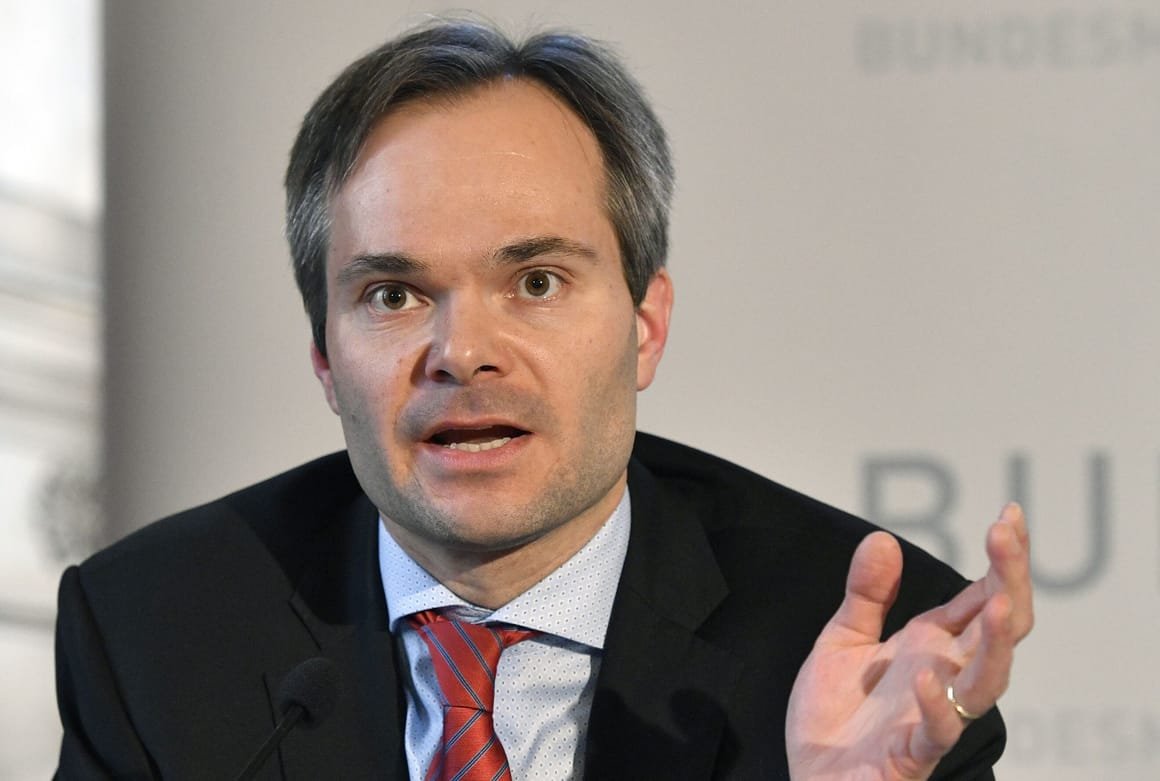
HELSINKI — Buying more gas from Donald Trump won’t solve the EU’s problems but will instead create fresh ones, Finland’s top energy official told POLITICO.
Trump has barreled back into the White House this month demanding the EU buy more U.S. energy if it wants to avoid punishing tariffs. Early indications are that EU executive chief Ursula von der Leyen is open to the idea.
But Finland’s outgoing Energy and Environment Minister Kai Mykkänen has warned against any move that could lock Europe into long-term liquefied natural gas (LNG) contracts, which would frustrate the continent’s climate plans.
“I encourage all countries to get rid of significant amounts of fossil fuels altogether — and in that sense, [there are] hopefully not any significant deals to be done” with Washington, Mykkänen said.
EU countries should “concentrate on getting rid of fossil [fuels] and not find new markets where to buy” it, the center-right politician added in a interview with POLITICO.
Mykkänen’s comments highlight a burgeoning tension in the EU. The bloc can ill afford Trump’s tariffs given its flagging economic outlook, and officials appear ready to make a deal with Washington involving gas. But any agreement has to be balanced against the EU’s legally binding climate commitments, as well as fears of overcommitting to one country for energy.
Already, some countries are indicating they’re not comfortable with mandating more U.S. gas. Germany, for instance, recently argued that U.S. supplies already dominate its gas imports and that the market should decide what happens next. And for countries like Finland, which aims to become climate neutral by 2035 (the EU’s target is 2050), picking Trump over climate action is not sensible.
“We should determinedly drop use of all fossil [fuels] — both fossil oil, coal and natural gas,” said Mykkänen, who resigned on Friday to take his seat as mayor of Finland’s second-largest city, Espoo.
Look at Russia, too
Although the EU has avoided specific tariff threats since Trump assumed office last week, the new president has not let go of his frustration with Europe.
Speaking at the World Economic Forum on Thursday, Trump again accused the bloc of treating the U.S. “very, very unfairly, very badly.” Trump has repeatedly warned the EU is taking advantage of the U.S. in the form of a yawning trade surplus — which stood at €157 billion in 2023.
Fearing retaliation from Washington, Brussels is mulling a new transatlantic economic and trade package with Washington that is expected to include an LNG offer.
The U.S. is already the EU’s largest supplier of the supercooled fuel and is the world’s largest exporter of natural gas — a position it assumed after Russia slashed supplies following its full-scale invasion of Ukraine.
Despite that change, Mykkänen said the EU must push harder to eliminate lingering energy imports from Moscow, even if that means forging a deal with Russia-friendly Hungary.
The bloc has so far banned Russian coal and seaborne oil imports and has cut its reliance on Moscow for pipeline gas by two-thirds compared to pre-war levels. However, it continues to import record volumes of Russian LNG via tankers.
To reverse that trend, the EU should impose a “larger-scale ban” and sanctions on Russian LNG, Mykkänen said.
Brussels is set to circulate proposals for a 16th package of sanctions against Russia this week, and new restrictions on LNG are likely to be discussed. EU energy chief Dan Jørgensen will also present a dedicated “roadmap” to phase out Russian energy next month.
Still, any energy import restrictions are likely to face stiff opposition from countries like Hungary and Slovakia. The two central European nations, headed by PMs Viktor Orbán and Robert Fico, respectively, continue to rely heavily on Moscow for pipeline gas and oil.
Mykkänen argues the EU must explore novel ways to get Budapest on board. He agreed that one option would be to pay Hungary to overhaul its fossil fuel infrastructure, which has historically handled Russian oil but could be upgraded to process other fuel types.
Budapest’s top fuel oil and gas firm, MOL, previously told POLITICO it could quit Russian crude by next year — but only if the EU helps bankroll a “$500 million” upgrade of its refineries.
Failing that, Mykkänen said, all bets are off.
If Budapest and Bratislava “are not joining our common front in blocking Russia from [EU] energy markets,” he proposed, “they [should] lose benefits in other common policy areas.”