Kyiv’s decision not to renew a deal with the Kremlin hasn’t sparked the catastrophe the Slovak prime minister imagined.
PRAGUE — Robert Fico didn’t get much of a break over the holidays.
As ordinary Slovaks were preparing to celebrate Christmas and New Year, their populist prime minister was locked in a battery of diplomatic talks in Brussels and Moscow to try and keep Russian gas flowing to the country.
But, after his bid to keep paying the Kremlin for fuel failed — and the pipelines were turned off as 2024 came to an end — his increasingly hysterical warnings of an energy crisis in Central Europe look to be hot air.
According to Fico, the expiry of an agreement that allows Russian state energy firm Gazprom to export supplies via Ukraine would “have drastic impacts on all of us in the European Union.” And the Slovak leader has even threatened to cut off electricity exports to Kyiv in retribution for its refusal to renegotiate the deal with Russia, teaming up with Hungarian Prime Minister Viktor Orbán to pressure Ukraine.
Despite that, days after the gas stopped flowing, predictions of shortages have been proven wrong and prices have not skyrocketed.
According to statistics from Gas Infrastructure Europe, Slovakia’s reserves are more than three-quarters full, above the seasonal average, while Hungary’s sit at around 68 percent. Other European Union member countries that previously depended on Russian pipeline gas, namely Austria and the Czechia, also have healthy volumes in storage.
“There is of course no crisis,” said Laurent Ruseckas, a leading gas markets expert and executive director at commodities intelligence giant S&P Global. “There’s no supply problem for Slovakia or nearby countries like Austria and Czechia. There’s a relatively high storage capacity compared to demand so even if there were no alternative sources, there would be no supply problem. And there are plenty of alternatives.”
Meanwhile, Michal Kocůrek, an energy expert at Czech-based consultancy firm EGÚ, said the impact on the EU as a whole would be marginal. “I would even dare to say that one risk — that the traders were constantly dealing with and that was being constantly manipulated and driving the price up — has finally disappeared. So soon it will become very apparent that Slovakia is well-supplied and no problems are occurring, and that the prices on the EU market are falling,” he said.
Cash grab
Now, some are questioning whether Fico even really believed a crisis would be on the cards in the first place.
According to GLOBSEC economist Vladimír Vaňo, Slovakia was well-prepared for the end of the deal — which he said was long expected and hardly surprising. “Slovakia has been preparing for this situation since the beginning of the invasion,” he said.
And, according to Ruseckas, while bills might rise slightly, traders had already “priced in” the end of the transit agreement, and the German government’s decision to end gas transit fees on supplies being shipped to Central Europe will help avoid a sharp cost spike.
Instead, though, Fico will miss out on income earned by shipping Russian gas on to its neighbors, with state-owned energy firm SPP set to lose out on tens of millions of euros in transit fees. “Slovakia will no longer be transiting gas to other countries so this income for state-owned companies will be gone,” the S&P analyst added. Ukraine alleges Slovakia earns as much as half a billion euros a year dealing in Russian gas.
Speaking to POLITICO following Fico’s Moscow trip, Katarína Roth Neveďalová, a member of the European Parliament from his governing Smer party, said that it was true Slovakia’s “energy sources are coming from Russia so it is very important for us to secure the delivery of gas and oil from Russia.”
At the same time, she admitted, the issue of the Ukraine gas deal was of utmost importance for the government “because we are a transit country — so transit fees are a big part of the state budget so we don’t want this to end.”
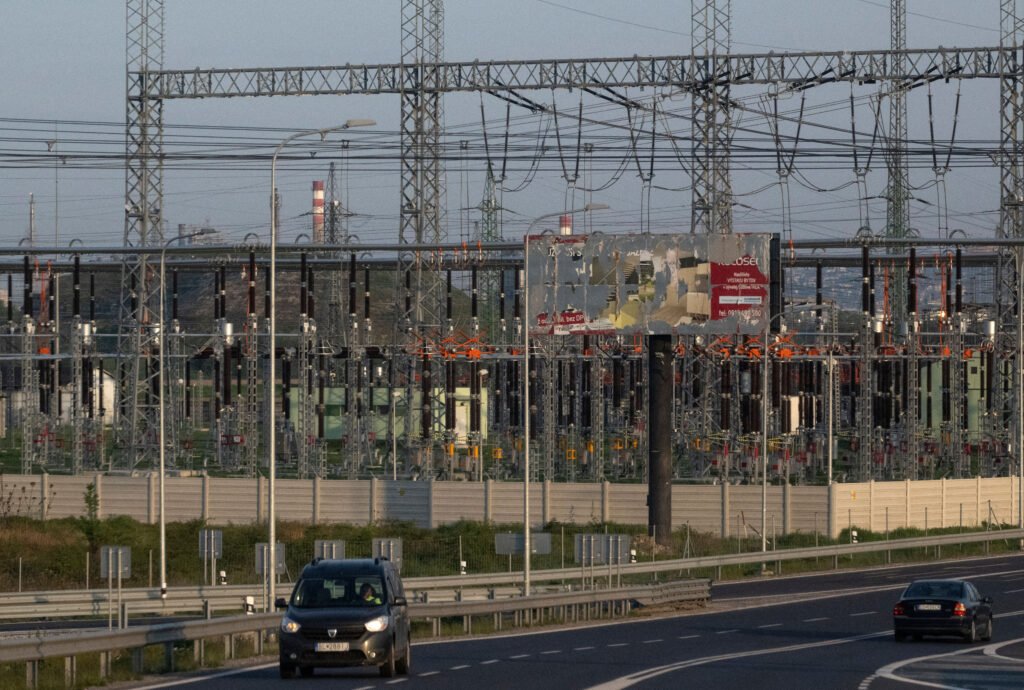
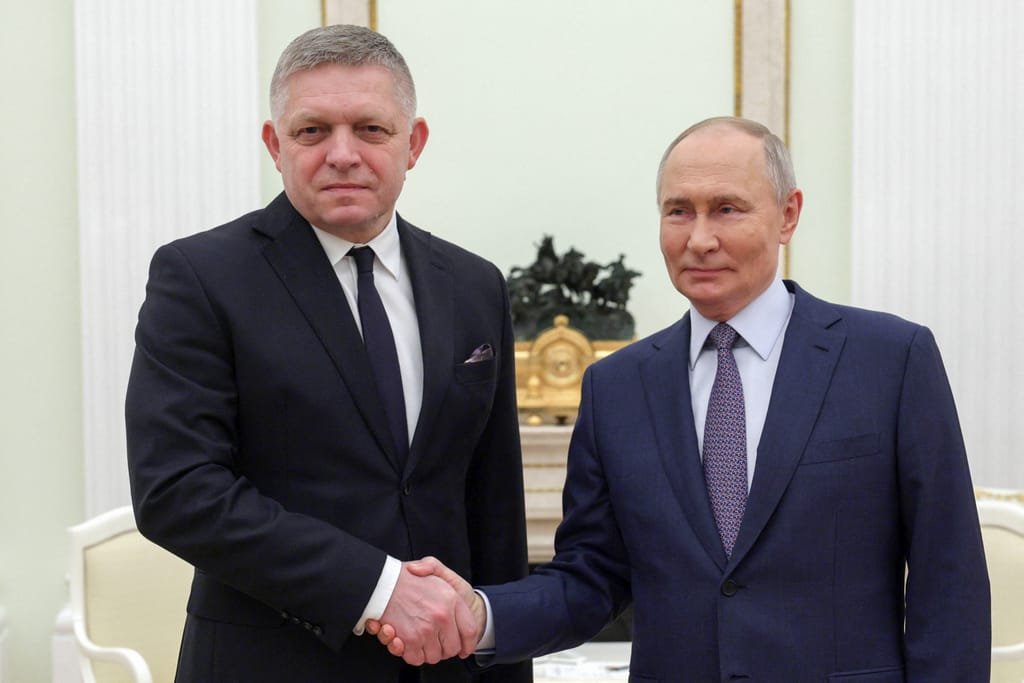
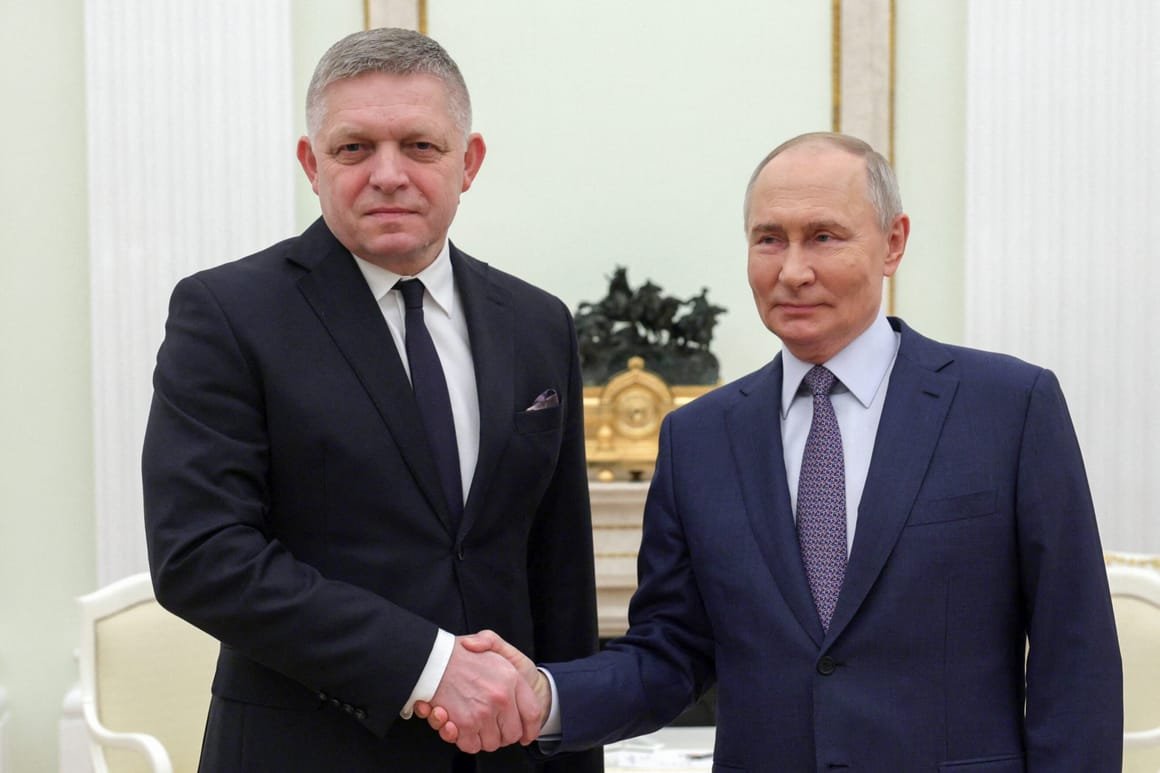
Fico’s increasingly desperate efforts to keep the profitable loophole open have driven yet another wedge between him and fellow EU leaders. A surprise visit to Moscow on Dec. 22 to hold direct talks with President Vladimir Putin drew condemnation, with Czech Foreign Minister Jan Lipavský saying his own country had “secured independence from Russian energy supplies so we wouldn’t have to crawl in front of a mass murderer.”
Either way, the gambit has burned whatever leverage Slovakia might have had with neighboring Ukraine. Speaking to POLITICO earlier this week, Ukrainian Energy Minister German Galushchenko called Fico’s bluff and said it was unlikely he would even be able to cut off power exports, given it would be “absolutely contrary” to EU rules.
In a bid to escalate the political row, Fico on Thursday threatened to « significantly reduce support » for Ukrainians living in Slovakia.
Gabriel Gavin and Ketrin Jochecová reported from Prague. Hanne Cokelaere reported from Brussels.