
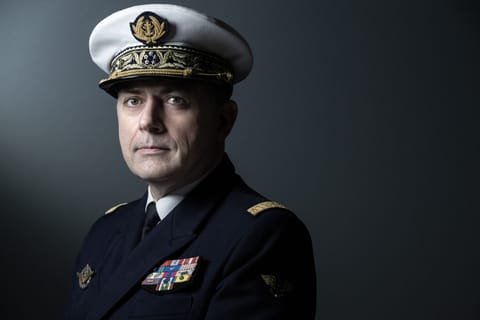
A new NATO-Ukraine center will help the alliance keep an edge over Russia, a top NATO commander tells POLITICO.
How can NATO draw lessons from three years of war in Ukraine to be better prepared for an attack by Vladimir Putin?
That’s the mission of a new center in Poland, to be inaugurated next month, where NATO officials, civilians and Ukrainians will study what has been learned in fields such as drone warfare, air defenses, artificial intelligence and the resilience of civilian populations.
The center will be called the NATO-Ukraine Joint Analysis, Training, and Education Centre — or JATEC — and will be based in the northern city of Bydgoszcz.
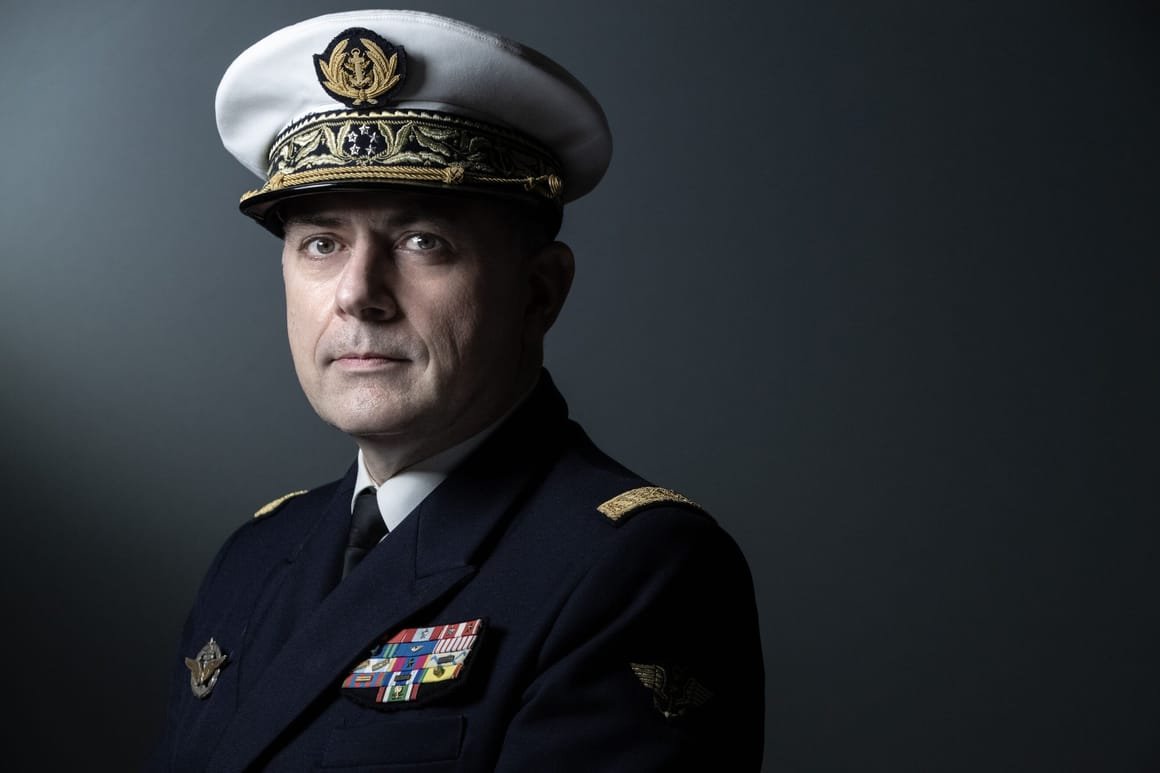
“It’s been three years, and there’s a real question of what we’ve learned and what we’re going to change, knowing that the enemy is also adapting at speed and at scale,” NATO’s supreme allied commander transformation, Adm. Pierre Vandier, said in an interview with POLITICO.
Vandier said one of the chief areas to explore centered on how the Ukrainian war merged space-age technology with brutal trench fighting and artillery bombardments — what he described as “the mix between World War I and the war of the future.”
“Today, we have a better vision of the mix between legacy platforms — tanks, aircraft, ships — and new capabilities that use unmanned systems, that is to say robotics and IT,” he said.
Ukrainian soldiers fight in trenches and use artillery in ways that would be familiar more than a century ago, but they also use drones, AI and space communications. As a result, Ukraine’s artillery has become more efficient, the French admiral explained, and therefore more lethal.
These sort of lessons are essential for NATO to remain “conventionally and strategically credible,”he said.
JATEC was officially endorsed by leaders at the Washington NATO summit last June. While Kyiv is still waiting for a formal invitation to join the alliance, the center was pitched as the first joint NATO-Ukraine institution.
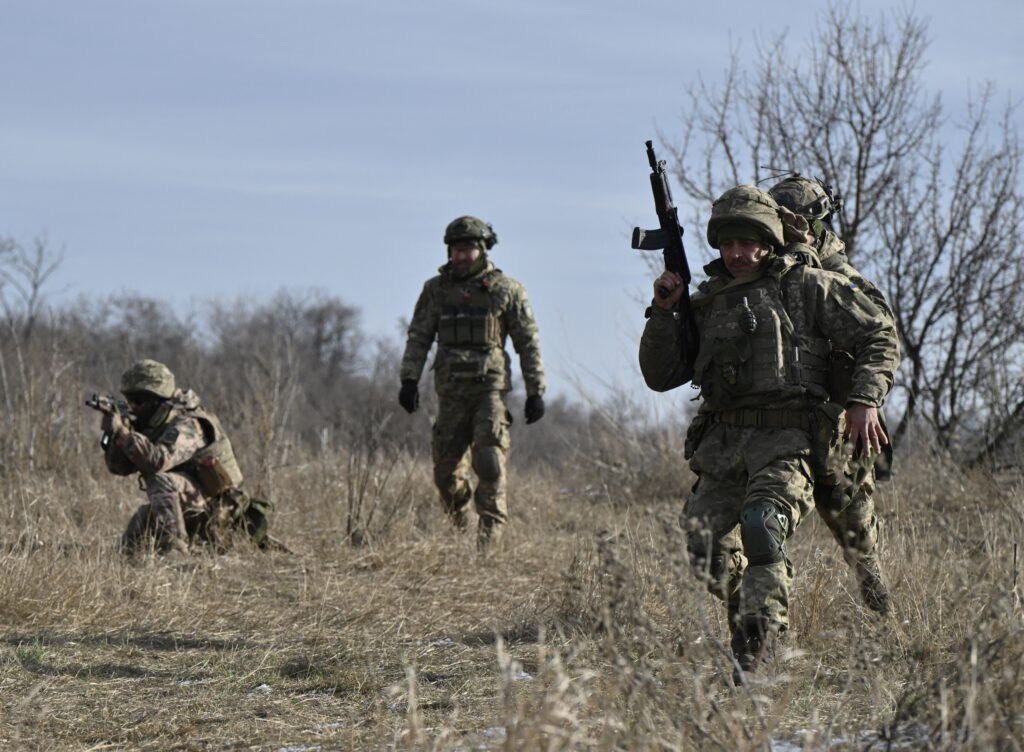
The creation of the center also reflects NATO’s pivot away from post-Cold War counter-insurgency, expeditionary warfare in faraway countries such as Afghanistan and Mali to focus again on preparing for a potential high-intensity conflict against Russia.
On top of a massive defense spending boost in the past three years, member nations are also in the process of relearning conventional warfighting by adapting training and military exercises to the new reality.
“We’re returning to subjects that had been somewhat neglected since the end of the Cold War,” Vandier stressed.
Combating Russia’s glide bombs
JATEC will initially be staffed with 70 people, including 20 Ukrainians, and is expected to grow. It will operate under NATO’s Allied Command Transformation, which is in charge of preparing the alliance for the future of warfare.
The lessons learned will be incorporated into the Joint Warfare Centre and the Joint Force Training Centre’s military exercises.
The center will kick off by working on Ukraine’s interoperability with NATO, the protection of civilian infrastructure and “the defense against weapons that Russia successfully employed during the war ” such as Lancet loitering munitions and glide bombs, Rear Adm. Placido Torresi told POLITICO.
Torresi, who is ACT’s deputy chief of staff for multi-domain force, is described by Vandier as “the father of JATEC.”
Eventually, JATEC will go beyond battlefield feedback to also better enhance cooperation between NATO and Ukrainian armed forces in areas such as training and doctrine, Torresi explained, adding the center also has a civilian dimension.
In the center’s early days, however, one of the main focuses is expected to be analysis of weaponry and war tactics.
In December, the supreme allied commander Europe asked ACT to try out air defense systems that had been used in Ukraine.
“In a matter of weeks, we bought these materials, we put them in the field and we were able to assess their relevance for NATO,” Vandier said, declining to provide more details because they’re confidential. “Tomorrow, that will be JATEC’s job.”
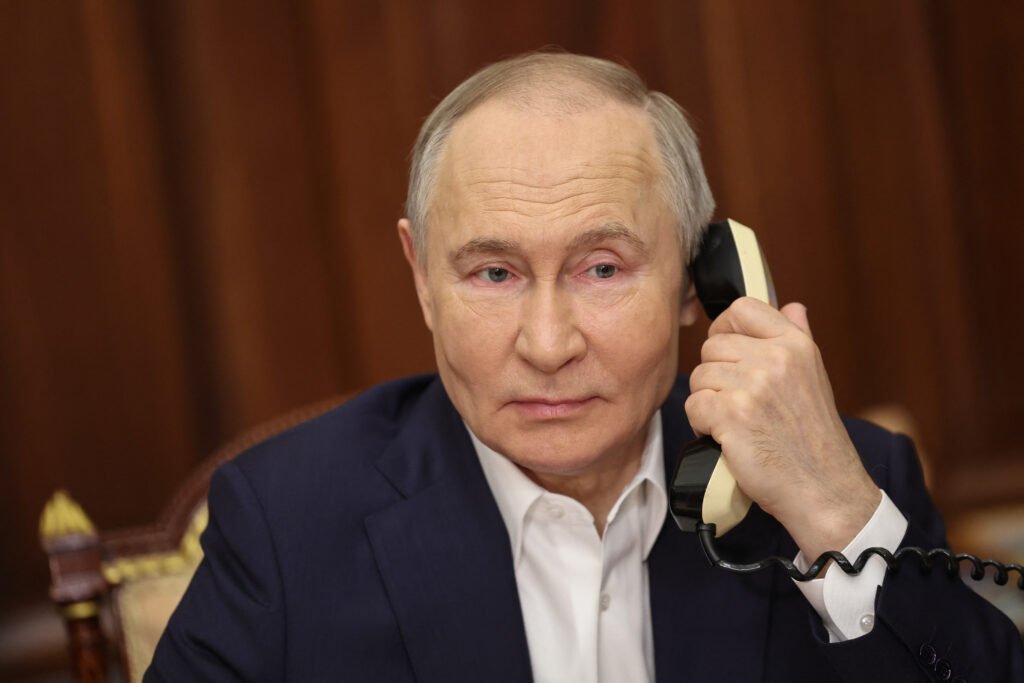
Focusing on arms development is key because Moscow is learning too — especially in the field of electronic warfare. According to a paper published by the European Council on Foreign Relations this month, “Russia and Ukraine are playing a cat-and-mouse game, with fast innovation cycles for both drones and counter-drone technologies.”
On the Ukrainian front lines, the lifespan of drone software is roughly a month and a half, Vandier said.
“There are always teams working to make sure that the sword always remains sharp because there is very quickly a shield that works. It’s a constant war of adaptation,” the French admiral explained.
Massive laboratory
Ukraine has essentially become a massive laboratory for military AI, and Western defense contractors hope to use the war to sharpen their equipment.
For example, KNDS France and Helsing, a European defense-tech startup, are testing an AI-enhanced version of the French company’s flagship Caesar self-propelled howitzer on Ukraine’s battlefields.
Another lesson, which is already increasingly taken into account by NATO militaries, is the importance of drones. In its analysis, the European Council on Foreign Relations called on the West to be able to scale up drone production quickly if needed and to limit reliance on China for components.
Ultimately, Vandier said, NATO will have to incorporate the experience from Ukraine regardless of whether Kyiv joins the alliance.
While the Ukrainian Defense Ministry initially presented JATEC as a way to “expedite Ukraine’s NATO membership process,” the issue has become much thornier since Donald Trump won the United States election. The incoming U.S. president is even less keen than his predecessor on welcoming the Ukrainians into the alliance.
“JATEC’s relevance is independent of the question of whether Ukraine joins NATO,” the French admiral said, “In any case, Ukraine is a NATO partner and we’re going to need its lessons.”