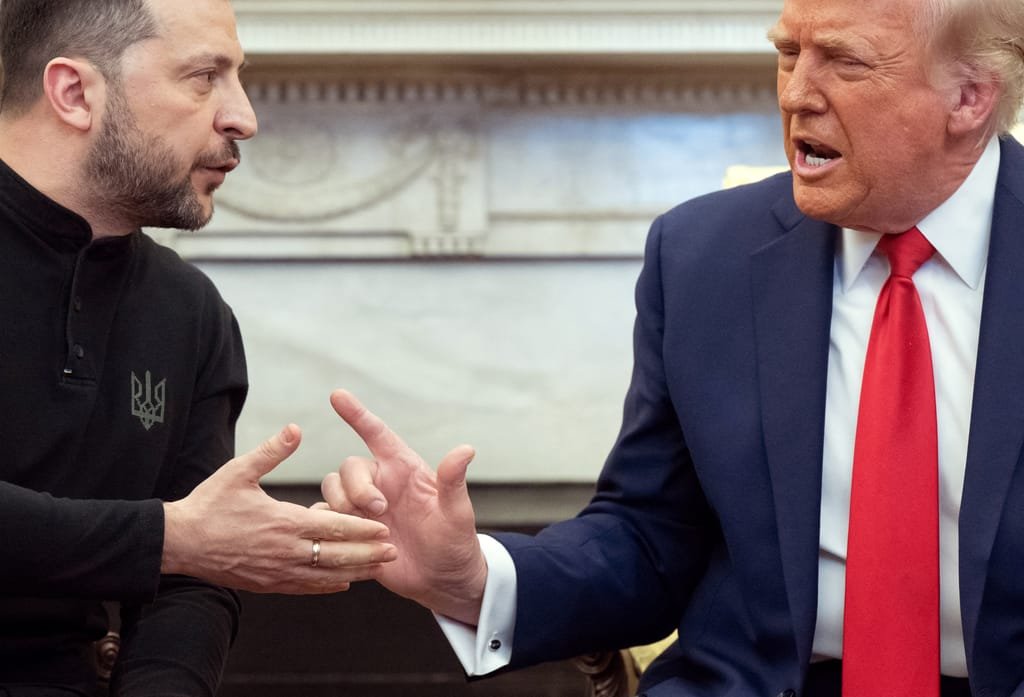
Pro-choice advocates want Europe to enshrine the right to abortion in the EU Charter and provide funding for women in need.
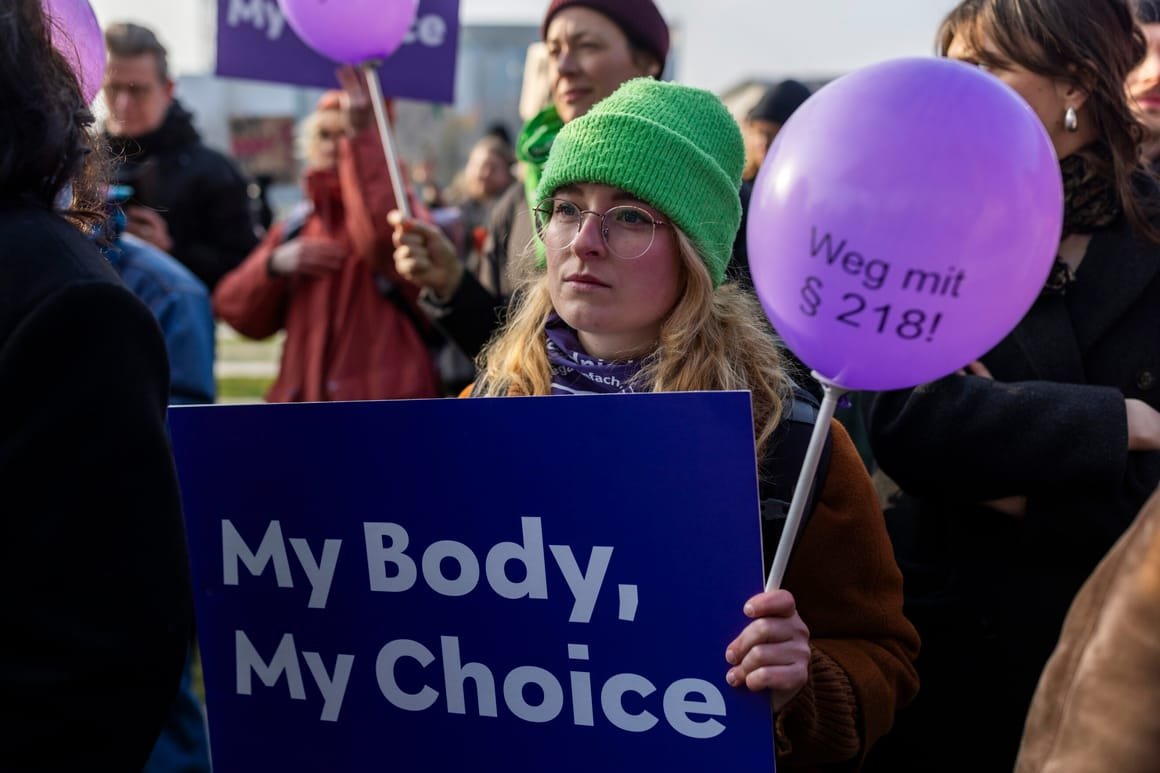
Civic groups and policymakers are urging the European Union to safeguard sexual and reproductive rights in Europe amid abortion restrictions in the United States and the rise of far-right governments across the continent.
Days after taking office on Jan. 20, U.S. President Donald Trump signed several executive orders reviving anti-abortion policies from his first term, including reinstating the « Mexico City Policy » — also known as the global gag rule — which blocks federal funding for NGOs that provide abortion services or campaign for its decriminalization. Washington also rejoined the Geneva Consensus Declaration, an international anti-abortion pact.
Pro-choice groups fear these actions will hinder the work of NGOs offering sexual and reproductive health services worldwide — including in Europe — preventing people from accessing life-saving care. Advocates and lawmakers are urging Europe not to stand idle in the face of what they see as incursions on human rights.
“Apathy is exactly what the Trump administration wants — we must respond with unity, strength, and unwavering commitment,” said Micah Grzywnowicz, head of the European network at the International Planned Parenthood Federation (IPPF).
For some members of the European Parliament, the solution is as simple as enshrining the right to abortion in the EU Charter of Fundamental Rights. MEPs asked for this in April 2024, passing a non-binding resolution by a margin of 336 votes to 163 with 39 abstentions. They also passed a similar resolution in 2022.
The latest text calls for everyone to have “the right to bodily autonomy, to free, informed, full and universal access to [sexual and reproductive health rights], and to all related healthcare services without discrimination, including access to safe and legal abortion.”
Supporters of the text say these changes are more important than ever given Trump’s actions.
“If we [took] the decision at the EU level, it could have a positive impact on the different member states,” Greens MEP Tilly Metz told POLITICO. “It should be really an alarm and a call to put it in text where it cannot be reversed.”
Enshrining the right to abortion would “help protect the rights of European women,” added Socialists and Democrats MEP Lina Gálvez, who chairs the FEMM women’s rights committee.
But changing the Charter requires the agreement of all 27 EU member countries — including those with strict abortion rules. With recent elections installing more right-wing governments from the Netherlands to Italy, this would now seem a bridge too far.
“I am afraid this is not realistic at the moment, as we need all the 27 countries, including Hungary, to be unanimous about changing the Charter,” said MEP Romana Jerković of the S&D. Hungary and Poland are also signatories to the anti-abortion Geneva Consensus Declaration.
“With the current power constellation and [European Commission President Ursula] von der Leyen’s tendencies to cater to the hard right, this is simply not a feasible undertaking,” Jerković concluded.
Alternative approaches
National approaches could have more success, however. Last year, France became the first country to enshrine the right to abortion in its constitution.
Jerković said it was “imperative that EU countries with progressive governments follow France’s example and vote to include the right to abortion as a constitutional right.”
Such an initiative would also send “a strong signal to the U.S.,” she said, as well as to EU countries with anti-abortion sentiments, to the effect that “Europe will defend its century-long civilizational achievements and will not fail its women.”
Meanwhile, activists behind the “My Voice, My Choice” European Citizens’ Initiative have been campaigning for the Commission to establish a fund to help women who can’t access abortion care in their own country to travel to another with more liberal abortion laws.
The initiative has already met its goal of collecting 1 million signatures — meaning the Commission will now have to consider the proposal.
“What is happening now reinforces our belief that we must do everything to prevent what is happening in the U.S. from happening to Europe,” the team behind the initiative told POLITICO. The European Commission will soon have “a perfect opportunity” to act in line with European values, they added.
Double blow
This isn’t the first time Europe has had to deal with the ripple effect of Trump’s conservative policies. His first term from 2017 to 2021, and the overturn of Roe v. Wade in 2022 previously rocked the EU’s abortion movement, empowering European anti-abortion activists.
But this time, things are different.
“In the previous Trump administration, governments stepped up and were able to fill the gap,” said Melissa Cockroft, global lead on abortion at the IPPF. “But we know that … due to many other ongoing crises, there is less funding available.”
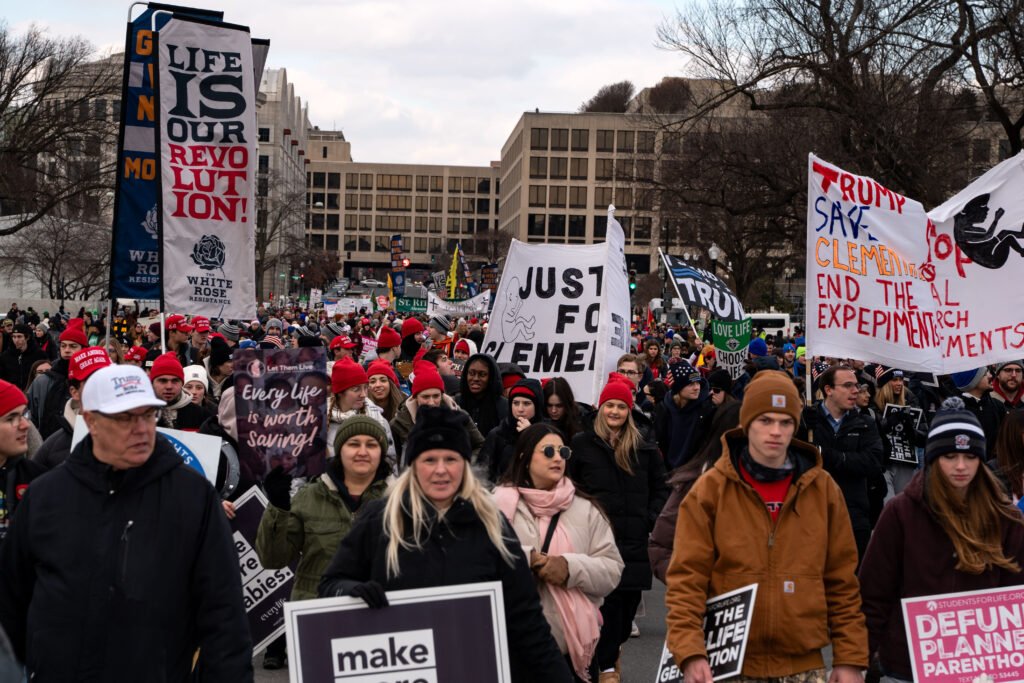
“The fear is [that] more conservative governments are less likely to give aid,” she said, and that “sexual reproductive health will be neglected.”
The sexual and reproductive rights movement is resilient, said Stephanie van der Wijk, senior program officer advocacy at Rutgers, having already faced many of these problems in the past. Still, “the global effects of U.S. policies are increasing,” she told POLITICO. “We are strong and united as civil society and as a movement, but [we need to see] diplomatic and financial support. They need to step up their game.”
To groups on the ground, nothing beats the need for funding. And if it’s not coming from the U.S., then it needs to come from Europe.
“Maybe the European Union itself could also step up its support and commitment to sexual and reproductive health and rights and abortion internationally,” said Paula Dijk, program manager at Rutgers. « [Not only] in terms of moral support and speaking out to protect these rights, but also financially.
« There’s such a financial gap that will now be created, and in the end it’s women, mostly in the least developed countries, who will suffer most.”
Giovanna Coi contributed to this report.