
An aide-mémoire to Secretary of State Marco Rubio from a former adviser to Tony Blair.
Ed Husain is a senior fellow at the Council on Foreign Relations and a professor at the School of Foreign Service at Georgetown University. He was an adviser to former U.K. Prime Minister Tony Blairand is the author of several books, including “The Islamist.”
To Secretary of State Marco Rubio,
Soon, you will be traveling to the Middle East — a region where U.S. interests in energy, trade, security, artificial intelligence and countering China all converge. And your recent success in Panama sets expectations of more gains.
Today, President Donald Trump is widely respected among most Arabs, Israelis, Kurds and Turks — but not in Iran. And you will be charged with the difficult tasks of possibly making peace with Iran, between Israel and Palestine, and more.
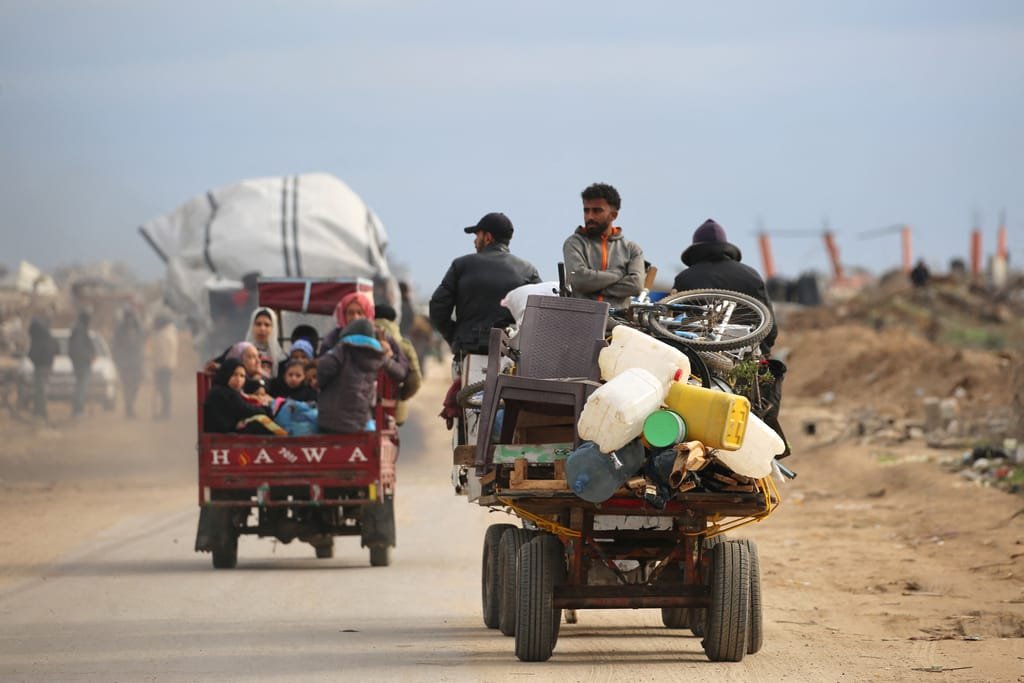
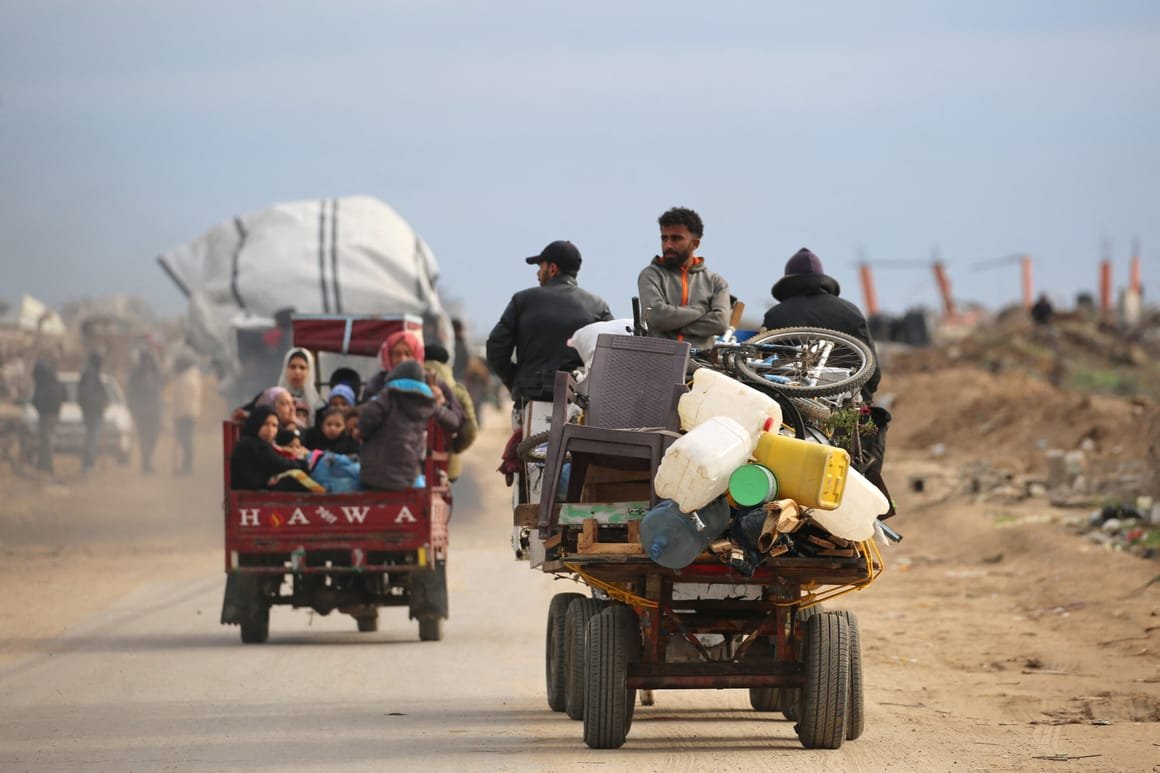
You are also inheriting a State Department in desperate need of leadership and strength. When Arab leaders asked your predecessor Antony Blinken to get a grip on the Gaza conflict and end his tenure by banging heads together, he simply replied: “You know that’s not my style.” I even sat in a meeting where he referred to Hamas’ terror leader as “Mr. Sinwar.” But being nice and wanting to be liked has resulted in Gaza’s demolition, and in President Trump’s opening gambit, proposing to relocate its entire population.
After being sworn in, you spoke openly about faith, family and flag. During your confirmation hearing and time in the U.S. Senate, you showed mastery on the topic of Iran. These traits will win you more friends in the Middle East, but you must avoid the regional traps being laid for you. Your term is limited — your enemies can wait you out in Tehran, Gaza, Damascus, Yemen and elsewhere.
So, how to build a strategy that continues to deliver results even after you leave office? Who are America’s true friends and enemies?
Domestically, your intellectual challenge will be avoiding the “clash of civilization” myth of the American right. Conversely, you’ll face the incessant apologia from the left. China understands the tension between these two extremes in the U.S. It exports it for its anti-U.S. propaganda. Worryingly, there’s also a mood on the American right that’s anti-Jewish and anti-Israel. This will likely grow. But your actions abroad can dumbfound naysayers — here’s how:
First, don’t make the mistake of promoting democracy in the Middle East. Consolidating rule of law and a culture of greater individual liberty are more immediately important than democracy, which can come later if all goes well. In their absence, Islamist totalitarians take power and weaken U.S. interests (i.e. Iran, Algeria, Gaza, Egypt, Tunisia). Democracy promotion was a mistake of former President George W. Bush. Former President Joe Biden made the same error, guided by Samantha Power at the U.S. Agency for International Development.
Second, work with the laws of physics in the Middle East. Don’t seek to empower one party against another or play them off each other too much as former President Barack Obama tried to do with Iran against the Arab nations. The fact is, in the 26 countries that compose the Middle East and North Africa, the vast majority of those 500 million people are Sunni Arabs, and they are our natural allies. They helped destroy the Soviet Union by burying Communism in Afghanistan, and will help us contain Beijing if we understand and marshal the strength of religious faith against a godless China. That powerful narrative is yet to be shaped.
Third, build on the Abraham Accords — the Arab-Israeli normalization process started during President Trump’s first term. But here, Saudi Arabia’s price for a Palestinian state will not be, cannot be, paid by an Israel that genuinely fears for its own security. As long as mosques, schools, hospitals, universities and charities support the destruction of Israel and death to Jews, the U.S. cannot empower a terror base that gave us Oct. 7 and promises of more such attacks.
Nations like Indonesia, Brunei and Mauritania should thus be brought closer to Israel. Palestine must seek peace under new leadership. And if Egypt and Jordan oppose the idea of evacuating Gaza, they must bring their own plan as to how Hamas and Islamic Jihad will be removed from Gaza and the West Bank.
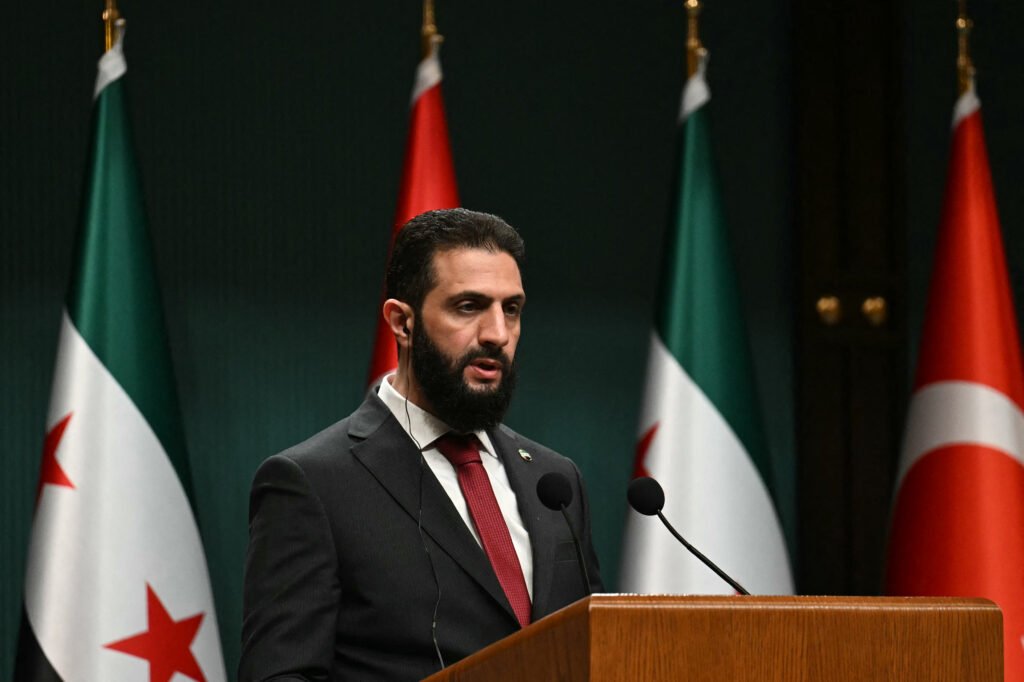
Fourth, you and your colleagues in Congress will be heavily lobbied to provide sanctions relief to Damascus and rescind the Caesar Act. But while Syria’s new leader may have exchanged his fighting gear for a formal suit and tie, we cannot be so easily fooled. His organization is a designated terror group.
Indeed, Ahmad al-Sharaa may claim to have changed his spots, but first, we need answers to important questions: What role will a literalist interpretation of Sharia law play in Syria? Did he support the 9/11 attacks? What are his views on Osama bin Laden? How many Americans did he or his organization kill in Iraq? Does he think Hamas and Islamic Jihad are worthy of Syria’s support? And does he recognize the legitimacy of Israel? We can accept change in politicians — Egypt’s Anwar Sadat and Russia’s Mikhail Gorbachev demonstrated clear evidence of it. Absent answers, we owe no support.
Fifth, in Washington, very little is understood about the Kurds. However, given the fluidity in Syria, the fears in Turkey, and U.S. fraternity with Syria’s Kurds who helped defeat the Islamic State, there’s urgent need for clarity. This important constituency of almost 50 million people could help you balance and convene around the concerns of Turkey, Iran, Syria, Iraq and Armenia — that’s five nations. Hold the Trump card and keep them all guessing, but ensure the Kurdistan Workers’ Party, a leftist terror outfit, isn’t enabled.
Sixth, while Iran’s clerics may be weak, they aren’t out of power yet. From the embassy hostages in 1979 to Iran-backed Hezbollah’s killing of 241 U.S. service members in Beirut in 1983, from Iranian proxies killing Americans in Iraq to Tehran supporting Venezuela and U.S. enemies in Latin America, the country is an avowed antagonist. Regime change is an Iranian choice, but when U.S. allies attack Iranian militias, or require U.S. support after Iran-backed strikes on airports, oil facilities, sea lanes, canals or commercial vessels, Iran should know the U.S. will hit back — and hard. Do not let Iran regroup its Shiite crescent. It takes the long view, and we should too.
Seventh, the British officer and diplomat T.E. Lawrence accurately observed that Arabs understand individuals, not institutions. They read humans. You should work with the best individuals in the highest levels of government of our regional allies, and bring them closer to the U.S.
Two such thoughtful men who will sincerely and creatively guide the U.S. and you, are to be found in Sheikh Abdullah bin Zayed Al Nahyan, deputy prime minister and foreign minister of the United Arab Emirates, and Ron Dermer, the minister of strategic affairs of Israel. Sheikh Abdullah signed and led the Abraham Accords from the Arab side. And he and his country didn’t nullify their commitments during the Gaza war. You won’t find better guides and friends in this complicated region.
“America is harmless as an enemy and treacherous as a friend,” lamented the late historian Bernard Lewis. You must change that and ensure U.S. loyalty to its friends and strike fear in its enemies. This legitimate use of American power makes its citizens safer at home too.